


Welcome to neuewave!
Typically, the monthly trend breakdown covers a collection of trends that have risen on social media, and what that signifies to us about culture as a whole. For March, as we analyzed social trends and cultural shifts, we have been fascinated by the rise and fall of various public figures– those who have either won or lost the public’s approval from their own content or public image. These individuals seemed to have led the online conversations and trends of the last month, revealing just how closely relatability and aspiration are intertwined for today’s social audience.
As we analyzed the rise and fall of this month’s key figures, one thing became clear: today’s audience isn’t just looking for inspiration—they’re looking for someone who still feels human enough to recognize themselves in. Let’s dive in!
It Girls & It Boys
If you want to figure out which “It” boy and girl will be thrust into the limelight in the upcoming months, look no further than Peacock’s “The Traitors”. After the finale (spoiler alert), where Rob Rausch from “Love Island” won the game by duping everyone, especially his faithful ally and fellow “Love Island” alum, Maura Higgins, Rob has been tapped by every brand that can get their hands on him; a MAC cosmetics billboard in Times Square, smut reading for Quinn, and campaigns for Kind, Doordash, and Celsius, to name a few. Maura’s own virality around her accent, fashion, and her new Birkin bag, gifted by Rob, has also earned her further notoriety. The two of them together have become new rising stars in pop culture.
This is a similar tale to last year’s season of “The Traitors”, where winners Gabby Windey and Dylan Efron, both with relatively modest fame going into the show, became massively popular after their time on the show. Both accumulated just under 300k followers on Instagram and have been tapped for bigger opportunities, including brand campaigns, film opportunities, and a spot on “Dancing with the Stars”. With the competition show’s rising popularity, it seems that if brands want to identify the next big influencer to partner with, they should look no further than next season’s cast list.
Another winner whose fame has recently skyrocketed is Alysa Liu, the Olympic Gold Medal-winning figure skater and the latest, unconventional Gen Z “It” girl. Admired for her unique style and laid-back mindset, she has graced the cover of Teen Vogue, inspired countless viral clips and photos, and made appearances on major TV programs including the “Today” show and “The Tonight Show Starring Jimmy Fallon.”. In the last month she’s become an overnight role model and a household name.
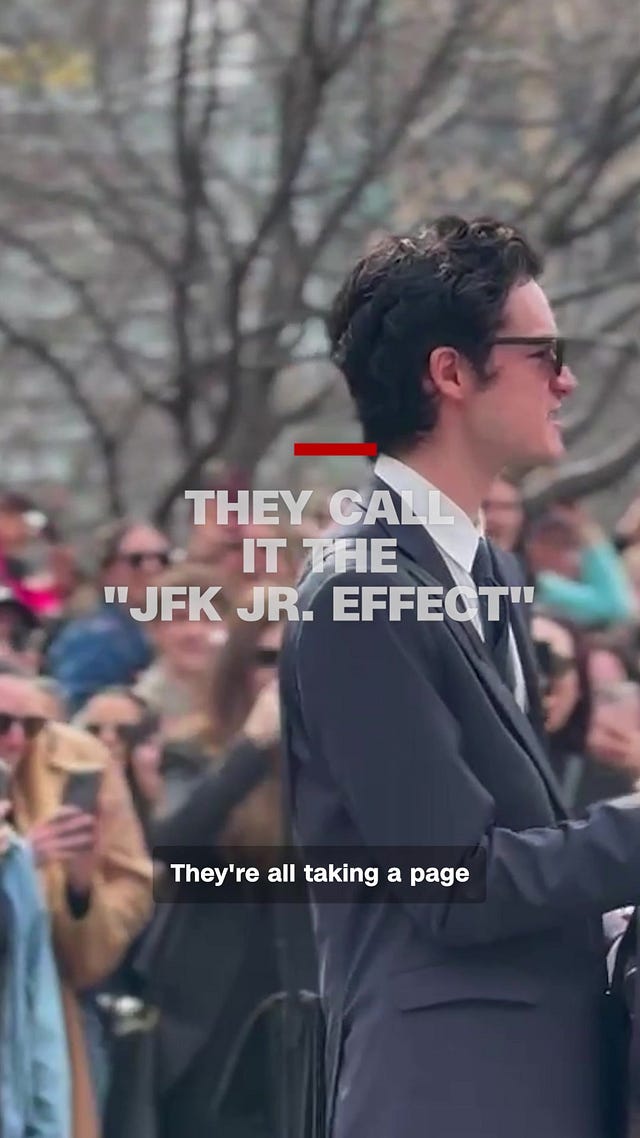
Lastly, do not think we have not seen the resurgence of “It” Couple, JFK Jr. and CBK. The new TV show “Love Story” has brought Carolyn Bassette Kennedy to the attention of younger generations, specifically her fashion sense. A promised “CBK Summer” of preppy, simple looks is already beginning to hit social feeds. JFK Jr. is also becoming a rediscovered heartthrob for Gen Z. In fact, his renewed popularity through the show has sparked another trend to resurface: The lookalike contest. Two have been held so far, and has furthered the renewed interest in the American “It” Couple, along with the actors playing them being thrust into a new level of stardom themselves.
 Tiktok failed to load.
Enable 3rd party cookies or use another browser
How this shows up on social:
It Boys and It Girls naturally wield plenty of content online, with Alysa Liu’s mindset and dance to Pink Pantheress “Stateside” has the track topping TikTok sounds, Traitors social commentary and Birkin Bag tours becoming viral, CBK-coded fashion and analysis beginning to circulate.
 Tiktok failed to load.
Enable 3rd party cookies or use another browser
It seems like in a world full of increasing tension, we are finding comfort in those we can relate to and feel like elevated versions of ourselves. When we see people who feel grounded or relatable rise to meteoric fame and luxury, we aren’t just fans of their success; we are also fans of the fact that they—like us—are new to it as well.
Look at the “Heated Rivalry” craze from earlier this year. Part of the magnetic appeal was the “regularness” of the leads—the fact that they were working as restaurant servers only months before they were presenting at the Golden Globes. Similarly, we find the relatability and grounded nature of Alysa Liu, Maura Higgins, or Rob Rausch captivating as they find new levels of notoriety. We get to enjoy glamour and success, but through someone who, until very recently, felt like one of our own.
Elite Misery
Just as a shared affinity for those we would like to elevate socially, we can just as easily find joy in the collective scrutiny of those perceived as disconnected from common culture. The CEO of McDonald’s learned this lesson the hard way this month, following his “taste test” video for the new Big Arch burger. Viewers were captivated by the robotic delivery, his strange reference to the burger as a “product”, and his hesitance to take a meaningful bite of the burger he’s trying to sell.
This video touches on a key distinction in authenticity. We know that authenticity matters more than ever for social audiences– but authenticity is multidimensional. It’s not unreasonable to assume that this video captured CEO Chris Kempczinski’s personality and the way he speaks about the company authentically, which is probably why there were no flags from the McD’s social team to rethink posting it. But what may be authentic to him, does not read as authentic to the human experience as a whole; if your ‘true self’ feels more like a corporate robot than a normal person enjoying a burger, the audience will view you as alien rather than a trusted source.
This alien quality isn’t just reserved for the corporate elite, but can manifest just as sharply when a creator’s personal brand appears insensitive to the global reality.
Dubai has become a global influencer hub in recent years, with an estimated 50,000 calling the destination home. Dubai-based influencers, whose (often) state-sponsored, hyper-luxurious lifestyles are under fire as they continue to party and post through global conflict. While many have expressed serious concern and distress, those who have complained about the flight restrictions in place, or their plans being thwarted due to the conflict have been quickly shut up by the internet for their out-of-touch coverage of global tragedy. While in completely different contexts, the throughline of content that feels out of touch or disconnected from the experience of everyday people will always harm the creator’s reputation with the audience that views it.
At a time when recently-regular stars are entering an era of newfound fame, the general consensus is one of celebration and acceptance for those who feel like us being rewarded after hard work, while executives and luxe-concerned influencers are increasingly difficult to find common ground with.
How this shows up on social:
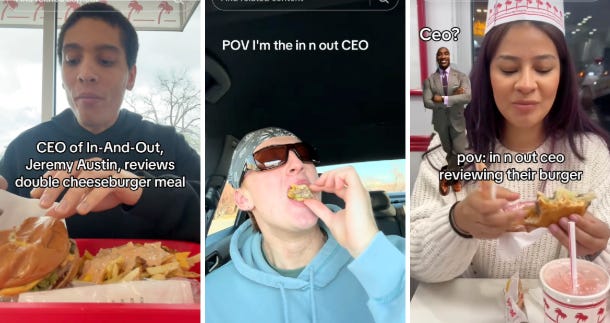
Seeing other fast-food leaders join the public in ridiculing the McD’s stiff performance has provided a unique sense of vindication for a weary audience. While the gen pop isn’t typically eager to hear from CEOs, the opportunity to appeal to the masses and appear like “one of us” created a rare moment of collective acceptance.
Their parodies have inspired countless recreations by other industries and small businesses, with their CEOs trying their products in their own videos. For brands that chose to stay out of it, like In-N-Out, consumers are filling the void with a growing collection of parody videos of the parody videos impersonating their CEO.
Dichotomy of Nostalgia
2000s IPs have emerged as the nostalgia engine this month, with media from the aughts undergoing high-profile reboots and investigative deep dives. Leading the charge, Hilary Duff’s return to music has reignited millennial Disney Channel nostalgia, as she officially confirmed her return to the global stage with “The Lucky Me Tour,” and “Call Her Daddy” appearance, plus a viral teaser for a Hannah Montana 20th-anniversary special has stirred excitement from fans.
Parallel to these celebratory returns is a surge in “post-reality” docuseries that transform the cult-classic spectacles of the 2000s into modern reckonings. New docuseries investigating the complicated legacies of America’s Next Top Model (ANTM to spare our fingers) and The Biggest Loser have dominated streaming charts, inviting audiences to re-examine the era’s problematic beauty standards and media practices. Although, these docuseries don’t quite take accountability for the problems– in fact, they seem to say “yeah it’s bad, but YOU, TV watchers, wanted it!” but that’s neither here nor there.
It’s a funny – peculiar even – dichotomy we face. The rose-colored glasses we have for decades past, where trends like missing 2016 and analogue revivals dominate the cultural zeitgeist, is juxtaposed with cultural moments we’d rather leave alone and remember as they were. Some moments, like the return of Disney icons, feel like a warm hug; others serve as a stark wake-up call to the era’s overlooked wrongdoings. It’s a messy brand of nostalgia that simultaneously welcomes back Hilary Duff while finally holding Tyra Banks accountable. Now that they’re back in the cultural conversation, society is left to unpack and address cultural elements that we want to leave behind. It’s literally only a matter of time until we’re reflecting back on this moment in time in the same way.
How this shows up on social:
The dichotomy of nostalgia is also evident in the content that has followed these reckoning. Specifically, when we look at the fallout of the ANTM-docuseries, the internet is awash with critiques of iconic moments, catching up with former models who were burned by the show, and commentary at large about how culture shaped ANTM, and vice versa. Alongside these in-depth analysis, we also saw a content trend making fun of the ways Tyra traumatized contestants through making them relive their worst moments, pointing to the show’s real damage caused through comedic content.
 Tiktok failed to load.
Enable 3rd party cookies or use another browser
In a world that feels increasingly heavy, we’re gravitating towards anything and anyone that feels grounded. From elevating new icons from TV and sports to collectively rejecting those that feel out of touch, the underlying demand remains the same: show us something real.
We know brands are feeling the pressure to be authentic and find genuine connections with online audiences. In a world where brands try to act like our friends and people act like a brand, we wonder whether there will be a priority moving forward to tap into this new “It” factor by embracing more stars plucked from obscurity to capitalize on their newfound appeal. This month is revealing that the real luxury for audiences is knowing that those they support stand on common ground.