



Welcome to Neuewave!
This month, we are taking “to the moon and back” quite literally. From AI developments, to reality TV scandals, to the looksmaxxing craze that is making us wish we could escape Earth right now too, we are excited to dive into the roller coaster ride that was the internet this month.
But before we dive in, we have some celebrating to do.
We are thrilled to announce that Neuemotion has been nominated for two Webby Awards! Webflow’s “AI Guy” Campaign has been nominated for Best B2B Campaign,and Toast’s “It’s the Little Things” collab with Keith Lee in the Creator/Influencer Partnership or Collaboration category!
To top it off, Webflow’s campaign is also a finalist in the Shorty Awards in both the B2B and Humor categories! It’s always an honor to be nominated alongside our amazing partners.
Voting is open now and we would appreciate your support!
Celebrations aside, what this month has made clear is the undeniable power of narrative, and our desire to see ourselves reflected in the stories we share. From the disturbing to the orbital, here is how we—and our favorite brands—are finding our place within the cultural stories we consume. Let’s dive in.
Reality Check
We have long considered reality television to be more than just a guilty pleasure medium. It is a prominent cultural force that influences culture and conversations, both onscreen and the dialogue that it sparks among viewers.
If this month hasn’t convinced you just how strong the influence of reality television is, I don’t know what will. From new reality dating shows dominating streaming, to the “Summer House” Amanda/West scandal that rocked the internet in a similar fashion to 2023’s #Scandoval, and the cancellation of reality star Taylor Frankie Paul’s “Bachelorette” season just days before it was meant to air, the impact of these stars proves they are far more than mere spectacles to ogle at.
There is always an interesting juxtaposition between how dominating these moments can be and how niche they are. For those who keep up with the lives of these reality stars, this . However, when scandals involving niche reality stars garner this kind of attention, there is almost always a deeper subtext at play, making even those who hear these names and say “who?”, lean in to the conversation unfolding.
These moments act as a catalyst for serious cultural conversations to enter the mainstream, forcing us to grapple and engage with discourse surrounding race and dating, domestic violence, and the intricate nuances of relationship dynamics overall. Reality TV may be a medium, but its cultural ripples are very much a reality.
How this shows up on social:
Reality television discourse becomes a serious engine for content online– from comedic content, to ironic commentary, to in-depth cultural analysis of what these developments say about our current state, and what cultural evolution we hope these moments will inspire.
What has fascinated us, in many ways, is not the stars of the scandals but their victims. When it comes to the Amanda/West dating scandal of “Summer House” (which is dying for a better, “Scandoval”-esque name), all eyes turned to West’s ex and Amanda’s BFF, Ciara Miller, who was not just personally wronged by her friend, but to fans of the show, was seriously played by West, even after their breakup. She has seen a wave of support, and every cryptic message and public appearance in which she alludes to the scandal has only brought more support her way online. It feels very reminiscent of the way Ariana Maddix skyrocketed into the public eye post-Scandoval, and perhaps we are on the precipice of Ciara rising above and beyond her reality fame as well.
When it comes to the “Bachelorette”, we were honestly shocked that they canceled the season. While the case with Taylor Frankie Paul (TFP) has certainly gotten its share of headlines, many people are asking: “But what about the men on her season?!”
The sympathy shared for the men who left their lives to film a show that will never see the airwaves has many of them going on content and interview marathons. In attempts to scrape up at least a little bit of internet traction in the face of their canceled season, contestants have made statements and content post-cancellation. This could be the first time we actually see people begging for spoilers from those who experienced it.
Fruit Slop
It’s been a blissful minute since we last covered the world of generative AI content. It isn’t that nothing has happened, but much of it felt like the logical conclusion of what we’ve previously discussed; a rebellion against AI simultaneously coupled with a general submission to its presence, leading to a stalemate in the conversation. That has changed recently, with the shutdown of Sora, OpenAI’s move toward ad integration, and OpenAI and Anthropic’s ongoing advertising standoff, each vying to position their product as the most useful and human-friendly platform.
A few AI-centric content trends have surfaced, including the “wearing a lot of hats” trend, and the guys who are exposing various AI platforms for their inaccuracies and missteps. But the internet was in dire need of a new, weird AI development for us all to scratch our heads at and raise our opposition towards.
Enter: AI fruit stories.
How this shows up on social:
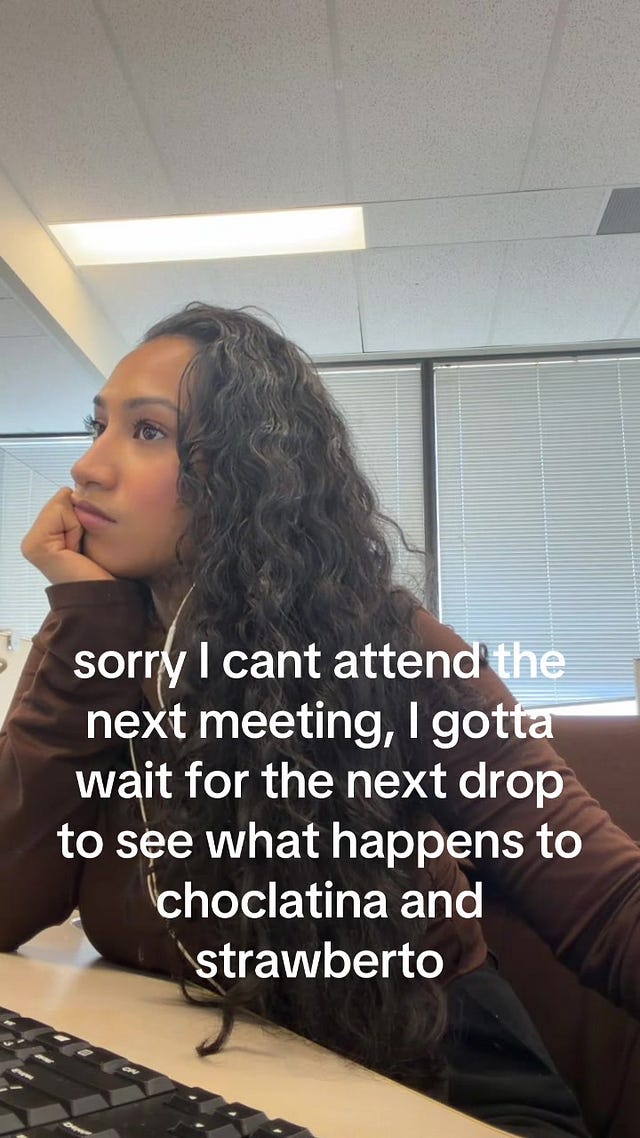
What started as content reminiscent of daytime television soap operas depicted through eerie animations of bananas, oranges, strawberries, and broccoli, has morphed into a 22-episode series of an AI-generated “Fruit Love Island” social series, that pulled over 10 million views per episode. It has not just stayed in it’s own corner of the internet– it has gained the attention of previous “Love Island” alum, and pop star Zara Larsson drew backlash for promoting AI after she posted a since deleted video where she wrote, “Sorry I can’t hang out today, I gotta see what’s happening with Choclatina and Strawberto.”, which coincidentally, has become an extremely niche content trend for the chronically online.
 Tiktok failed to load.
Enable 3rd party cookies or use another browser
However, there seems to be trouble in paradise, with its creator complaining of criticism of the use of AI and their videos getting deleted. Of the 22 episodes of “Fruit Love Island” posted to TikTok, only 10 remained live by the time it was done, and the account it lives on, AI.cinema021, has since disappeared– nobody sure if the account got taken down by the platform, or the creator deleted it altogether.
While it was fun for those who tuned in, it is clear that AI content is not just here to stay, but is also still subject to intense criticism. While it seemed that AI’s presence was becoming an accepted truth, perhaps the pushback that was sparked is telling that AI’s presence will continue to shrink.
To the Moon!
Let’s take a step back from our grounded reality, shall we? Not just in this Substack article, but in real life, the Artemis II moon mission has been a wholesome reprieve from more dire news cycles we have been discussing the last few months, igniting a unifying awe and reverence in modern technology, the human spirit, and outer space. When we have all been looking for ways to escape (see the demand for more reality shows above), this cultural moment is inspirational, genuinely ignites joy, and even brings a sense of nostalgia for a moment many of us didn’t witness.
How this shows up on social:
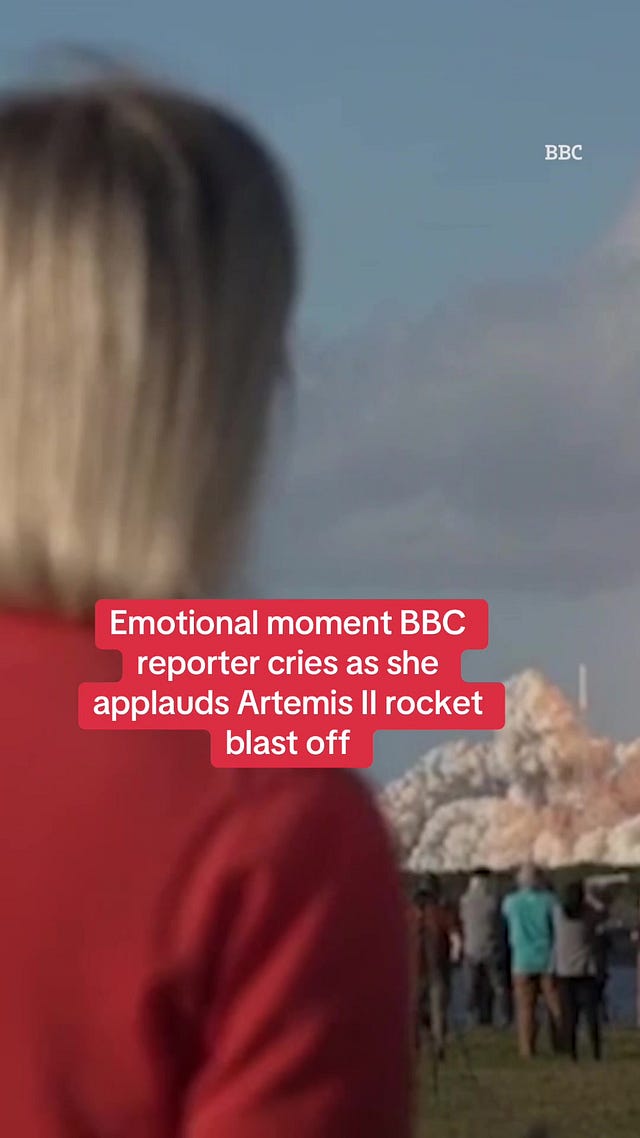
The energy that surrounds space travel and never-before-seen views of our moon can not be understated, with the BBC reporter going viral for her whimsical display of joy and wonder in witnessing the liftoff.
 Tiktok failed to load.
Enable 3rd party cookies or use another browser
In such a joyful moment, brand integration is reaching new heights. If you were lucky, like Nutella and Apple, your brand has been a star in live Artemis footage. But for those that haven’t had the same luck, brands like Chili’s and Minecraft have really jumped into the moment by weaving their products into the theme of space exploration—or, in Minecraft’s case, bringing the moon to their users through new educational builder content.
By inserting themselves into a story that the entire world is watching, brands are tapping into a primal human truth: we are hardwired for narrative. By becoming a character in the cultural zeitgeist, brands are fostering deeper connections through the deeply human stories that unite us.
Maxxing Out
We’ve been “-maxxing” for a long time now. If you are unfamiliar with the suffix being added to seemingly every word that exists, it is a slang ending meant to indicate that we are doing something with a ruthless, full-force effort.
It has taken many forms and trends over the years – sleepmaxxing becoming so popular it was featured in an episode of The Pitt, proteinmaxxing and fibermaxxing leading the health/wellness side of the internet, slowmaxxing as the response to people wanting to unplug, frictionmaxxing, where people are intentionally choosing less convenient options. Beyond that, I have seen catholicmaxxing, whimsymaxxing, lifemaxxing, gigglemaxxing, – there is no limit to the amount of -maxxing going on. Cemented in the Gen Z/Gen Alpha lexicon, if there could be a suffix of the year, the way there is a word of the year, we would place our bets on -maxxing in December.
How this shows up on social:
While it is a mostly harmless slang term, -maxxing has developed a dark side in some corners of the internet. Following the disturbing Manosphere documentary released last month and the attention that biohacking streamers like Braden Peters, more well know as Clavicular, have gained for their intense, problematic approach to achieving peak “attractiveness”, “looksmaxxing” is now being covered across social media, news outlets, and even SNL skits, discussing the extreme lengths young men will go to optimize their appearance amidst societal pressures.
Clavicular, the streamer and looksmaxxing influencer leading the charge, has ignited heated discussion online, every new piece of information he reveals about what he has done to become what he thinks is the most attractive version of himself, becoming more horrifying to some, and, unfortunately intriguing to others.
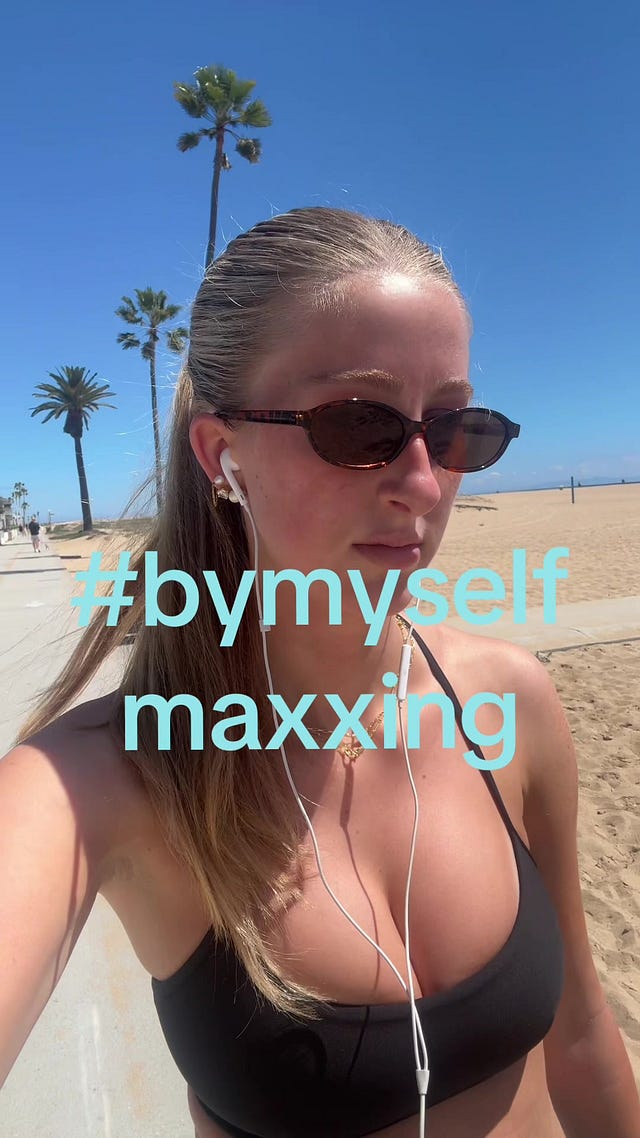
While we hope looksmaxxing and Clavicular leave the cultural conversation, in the -maxxing conversation, his recent use of “bymyselfmaxxing” in a viral video has created a new -maxxing movement to add to the list, where people are spending time alone as a way to ground themselves. Certainly the only thing he has said that we can get behind.
 Tiktok failed to load.
Enable 3rd party cookies or use another browser
At its core, this month’s landscape reveals that we are no longer passive observers; we are a culture obsessed with storytelling, and finds connection through the stories being told. Whether we are treating reality TV scandals as mirrors for our own moral values, humanizing AI fruit to satisfy our craving for drama, or “bymyselfmaxxing” , we are constantly looking for ways to bridge the gap between digital spectacle and personal identity.
This deep-seated need for narrative is exactly why it is more important than ever for brands to do more than just speak to an audience—they must build an immersive story that people can connect with. When a brand becomes a player in a larger cultural plot, it transforms a simple product into a point of deeper, more meaningful connection.
Need more perspectives from the NM team on the Bravoverse please!