


Welcome to Neuewave!
For us, our free time in the summer looks like leisurely time in the sun and watching 5+ hours of reality TV each week… not even mentioning how much time it takes to keep up with the online conversations about our Villa hyper-fixation after the show is over (iykyk).
All of this screen time has definitely been paying off, though. Neuemotion’s Associate Creative Strategist, Hailey Allen, actually just broke down how brands are showing up in and around Love Island USA for Muse by the Clios.
But beyond the villa, we’ve also continued to witness a broader cultural evolution, as audiences increasingly crave the real and the nuanced. Success online no longer goes to the loudest voice in the room or the biggest budget; it goes to those who actually understand subcultures, know when to show restraint, and aren’t afraid to let their humanity show. Let’s dive into the trends shaping the internet right now, from the niche to the robotic.
Hyper Niche Humor
The internet is never lacking in outlandish inside jokes that spread like wildfire, and it seems that year after year, things are getting more niche. Today’s humor relies less on traditional punchlines and more on rapid-fire iteration, deep cultural truths, and layers upon layers of nuance.
The internet has developed its own secret (and ever-changing) language, constantly evolving with fleeting, bizarre references that can create moments of hyper-niche comedy and connectivity.
This month, the pinnacle of this hyper-niche internet humor took place: The Las Culturistas Culture Awards, bringing this comedy to the forefront of entertainment and social media. Matt Rogers and Bowen Yang’s highly popular podcast hosts a yearly award show full of gags, cultural references, and performances unlike your typical award show. While there are plenty of references and moments that only loyal listeners would understand, their award show transcends their listenership by layering pop culture moments, a roster of comedian friends, and the extended Bravo/reality show universes combined to create wildly viral moments.
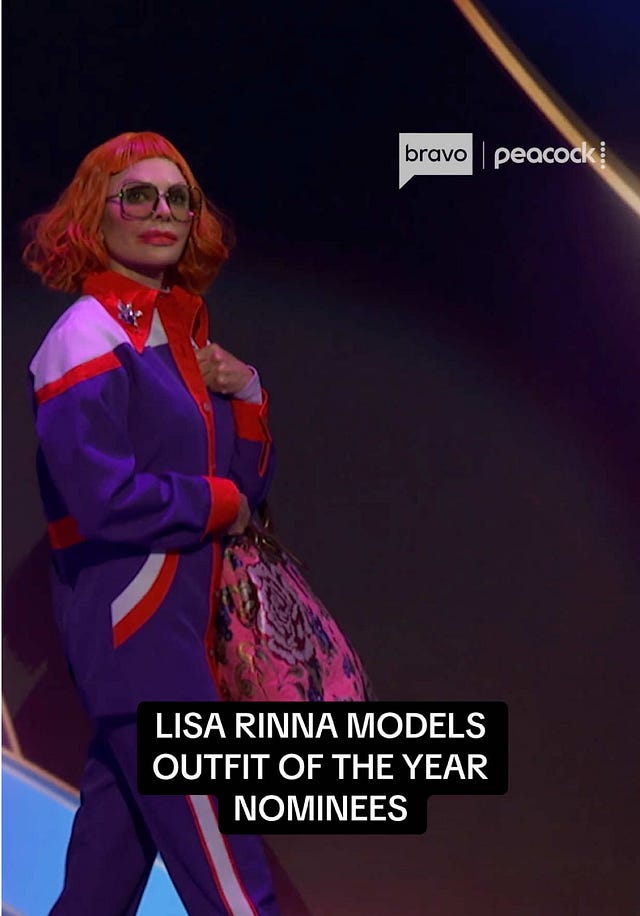
Of these moments was Lisa Rinna presenting nominees for “Outfit Of The Year” by dressing in the looks and embodying the personas that wore them, including Jacob Elordi leaving an airport and Billie Eilish as Justin Bieber’s “One Less Lonely Girl” at Coachella. Lisa Rinna’s cultural relevance over wildly niche references created a viral moment of its own and shows how hyper-niche humor and deep context are king when it comes to making the internet laugh.
 Tiktok failed to load.
Enable 3rd party cookies or use another browser
How this shows up on social:
The internet’s rapidly evolving sense of humor now centers on jokes so layered in irony, absurdism, and insular subculture lore that they are completely incomprehensible to anyone outside the loop. For example, the Minions, one of Illumination and Universal Studios’ most successful characters and children’s movie franchises, has continued to be a hyper-niche comedic fixation of Gen Z.
When the previous installment, Minions: The Rise of Gru, came out in 2022, Gen Z attended Minion movie premiers in full suits or Minion costumes, showcasing an ironic love for these children’s movie characters. Since then, many Minion impersonation and parody videos have been shared across socials, with the voice and nonsensical language serving as the punchline across many viral videos for Gen Z.
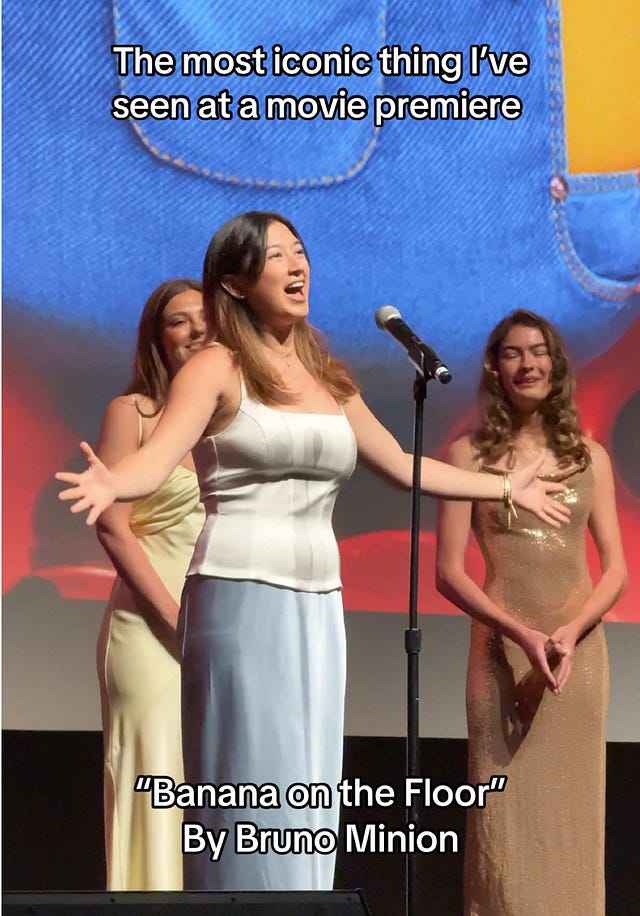
As hyper-niche humor increasingly becomes the gateway to this generation, Universal Studios leveraged that fascination at a recent movie premiere by hosting a “Minion Idol” competition, embracing the beloved absurdity surrounding the Minions within a quasi-serious talent pageant featuring the creators who have made a name off Minions-focused content. By fully committing to the bit, the studio proves that leveraging the rise of hyper-niche humor is a legitimate strategy to continue to build a connection with Gen Z.
 Tiktok failed to load.
Enable 3rd party cookies or use another browser
Stunts & Brand Participation
Whenever major cultural moments happen, we can always expect brands to find their way into the conversation. Brand participation in trends and viral moments can be hit-or-miss, and when especially big moments light up across socials, every brand social team feels the pressure to put their own spin on things– we even wrote the guide on deciding if your brand should jump in because of this pressure.
The World Cup, averaging over 5 million views per match, offers a huge platform for brands to leverage, and FIFA has been scrubbing the logos of those who haven’t paid to play, accidentally creating viral moments for their biggest victims.
Stadiums named after Gillette and Levi’s have been renamed, and their logos have been covered where they show up. Insider images have been shared across social media showing FIFA taping the Heinz logo on their condiment bottles. Levi’s is leveraging the viral cover-up of their logo at their San Francisco Bay Area Stadium on social media, creating limited-edition merchandise and a redaction-themed social series showcasing Levi’s in World Cup Fit Checks, censoring the brand name to turn an accidental viral moment into an organic content win.
Gillette and Heinz have followed suit, and together, the three brands created an anti-marketing trend where brands cover up or censor their logo to be a part of a cultural moment, while putting their own spin on it. However, when everyone hops on a trend, it can feel like a cringe moment rather than a clever cultural connection point– especially if your brand doesn’t make sense for the trend.
How this shows up on social:
An unexpected stunt makes the internet turn its heads– especially one that is emotionally moving. When extreme climbers Angela Nikolau and Ivan Kuznetsov staked their flag with a timely message at the top of the Empire State Building, just before Ivan proposed to Angela, the whole world was in awe of the mixture of danger, romance, and bravery on display. The two are now facing felony charges for a stunt meant to promote their upcoming Netflix documentary, Skywalkers: A Love Story.
There is something real to the swiftness with which brands need to move to capitalize on a viral moment– with social media users saying brands need to jump on trends within 24-48 hours of their popularity to be effective. So when the extreme climbing couple created a moving moment that spread quickly across news and socials, brands saw an opportunity that needed to be capitalized on, replacing their moving message with calls to buy products and silly branded quips.
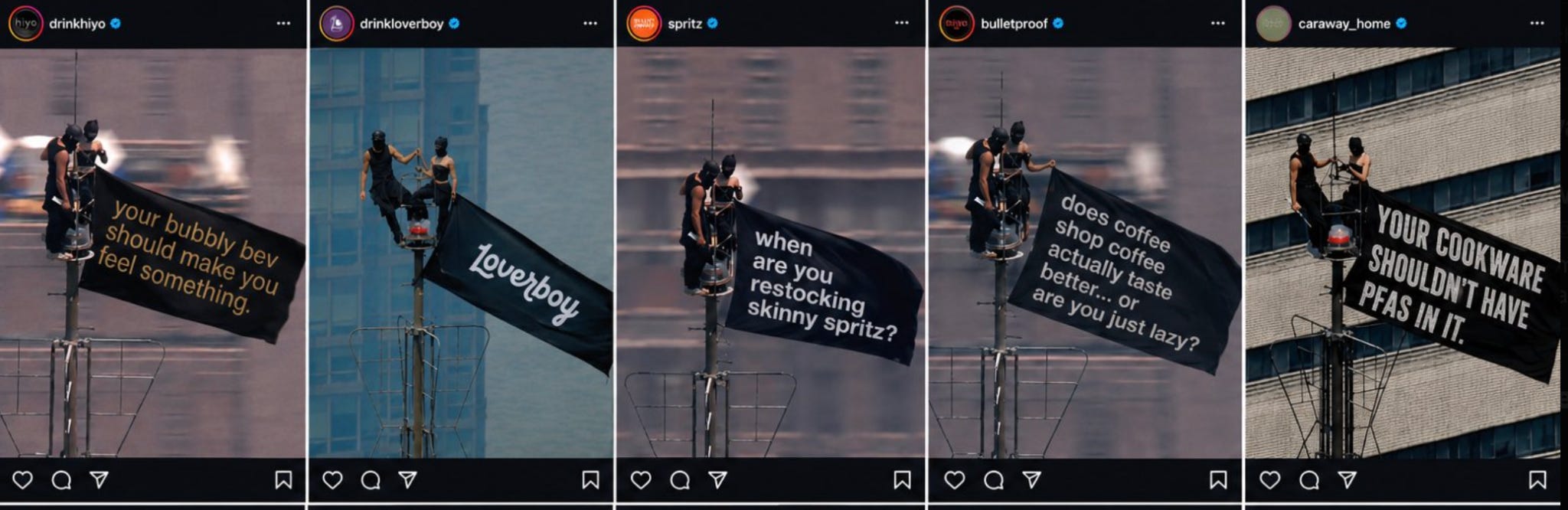
We understand the pressures brands feel to jump on viral moments, but there are moments that will be met with more distaste than positive payoff. While it may have seemed a bit overdone by some toward the end of the World Cup Logo Coverup, that felt like a moment that made sense for other brands because the original trend was brand-led. Although the Empire State Building Stunt was to advertise something, the deeply human nature of the moment should be a signal to brands to stay back. While this may feel like a timely and quick connection point with audiences, taking this human moment that inspired interest and awe and using it to promote your product or new promotion, without any credit to the original climbers, has left people with that “ick” feeling that so many get when brands try to take authentic cultural moments and make them into something that serves their brand.
AI Shame
Rather than succumbing to existential dread over the rise of artificial intelligence, internet users are actively pushing back. Despite rising concerns about how it has affected and will continue to affect the workforce, human intelligence, creativity, and the climate, a wave of digital resistance has emerged— ranging from subtle social media trends to the collective shaming of those who rely on AI for basic tasks.
With Polaroid taking another dig at AI and big tech in their latest campaign, users calling out Allbirds for pivoting their shoe brand into an AI company, and many entertainment platforms cracking down on AI usage and content. This widespread rejection has sparked a resurgence of AI-themed ridicule, cementing the technology as a prime target in public discourse.
How this shows up on social:
Love Island has continued to be the streaming show of the year in the US, clocking 2.3B minutes viewed through its first two weeks. As discussed in our June newsletter, Love Island is wildly popular not just as a viewing experience, but for the conversations and movements it sparks online.
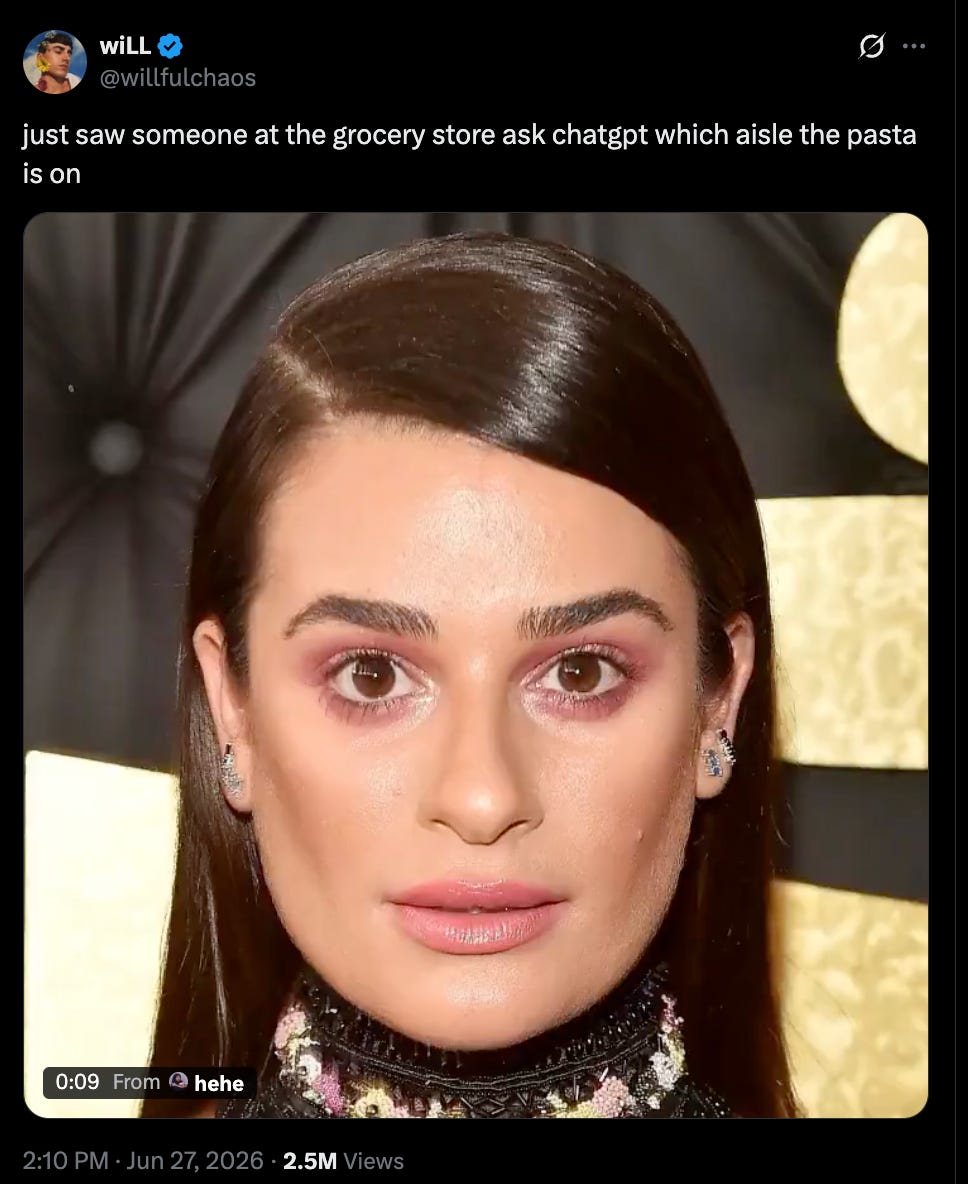
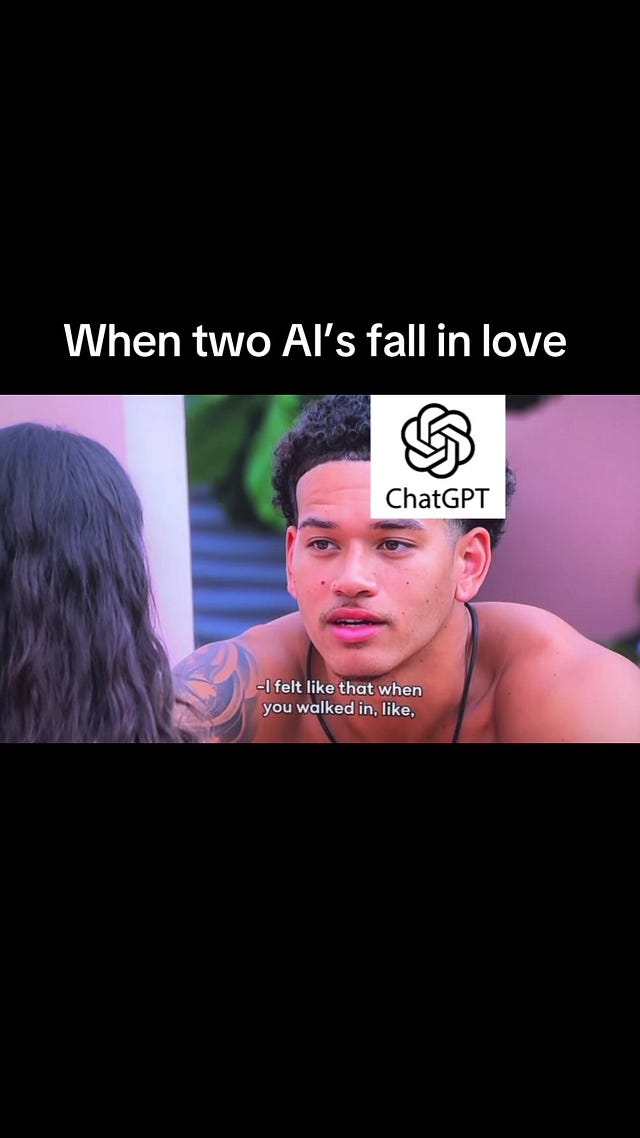
Fans of the show are now drawing a parallel between the overly perfect, lacking-in-substance quality of AI and the current roster of contestants. Two islanders in particular have been deemed “AI People” due to their overly perfect looks and the surface-level conversations they have with people in the villa.
Our opinion on these Islanders aside, this represents a significant cultural shift in how we relate to the world around us. Conversation around AI has moved beyond its technological implications and the advantages and disadvantages of using it as a tool; it’s now become a metaphor for real people who, perhaps due to slick editing and artificial reality TV circumstances, seem inauthentic or lack substance.
 Tiktok failed to load.
Enable 3rd party cookies or use another browser
Brands only win the moment when they’re building on something real (a hyper niche Minion obsession, not a marriage proposal). And AI keeps getting mocked specifically because it reads as smooth, average, and substance-free; the opposite of what’s resonating right now.
Content this month has continued to prove that specificity, timing, and restraint aren’t just nice-to-haves; they’re the whole game.
Our call to brands? Know the reference before you use it. Ask whether a moment is yours to join. And, when in doubt, err toward the human, imperfect, and particular, not the polished and generic.