


Welcome to Neuewave!
Luckily, we managed to tear ourselves away from the intense Love Island USA viewing schedule to bring another trend breakdown, mapping the subtle shifts and big conversations shaping social media right now.
This summer has officially kicked off, and with it, clear signs are emerging that the modern internet belongs to the niche– where context, raw authenticity, and the thrill of being in the know are leading the conversation online. Let’s get into it.
Colorful Language
Gen Z, with the help of social media’s ubiquity and evolution, has been creating a new form of language that brings many visual planes of expression to modern communication.
Every generation develops its own slang that older generations balk at; Gen Z’s has become so highly recognizable that there was a marketing content trend highlighting the differences between Millennial and Gen Z audiences in marketing copy.
However, it isn’t just the words that are said that carry meaning. Along with the increased variety of writing styles on social platforms, there has been a new evolution in text stylization, adding meaning to seemingly irrelevant features. Every detail, from font to punctuation to even color, now carries significant meaning and inflection without having to utter the word.
How this shows up on social:
This phenomenon was pioneered by millennials, whose use of varied font sizes, stylization, and emojis began in the early Facebook/MySpace era. We see it continue to grow into an increasingly recognized form of communication, with a thumbs–up emoji being as legitimate as a signature– not just culturally, but legally. Now, Gen Z is finding meaning and ways to communicate more nuanced feelings through none other than text colors.
If you are looking at this and thinking “text colors aren’t that deep”, remember: this is the generation that universally decided school subjects could be color-coded, agreeing that math is blue, and history is yellow. For them, color-coding emotions is a natural evolution and entirely on brand. The font color phenomenon began with “yellow font”, with a popularity in using big, yellow font over b-roll videos or photos to communicate deeper feelings, inner thoughts, inspiration, and hard truths.
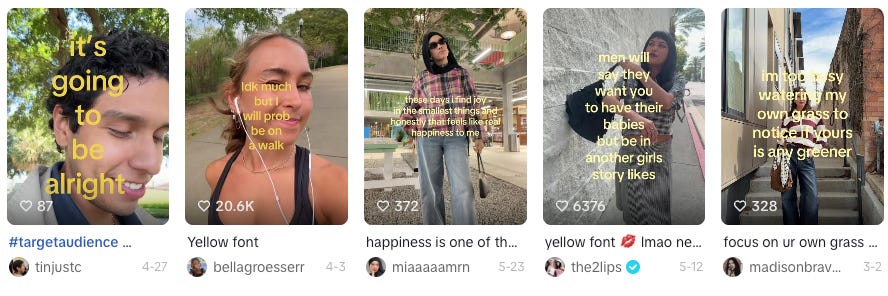
The hashtag #yellowfont has over half a million posts on TikTok, becoming a scroll-stopping content format that delivers deeper meaning and emotional insight without having to speak to it. Whether it started as a visual indicator of inflection that is missed, or a content growth tactic, it has snowballed into different colors being used to communicate different feelings.
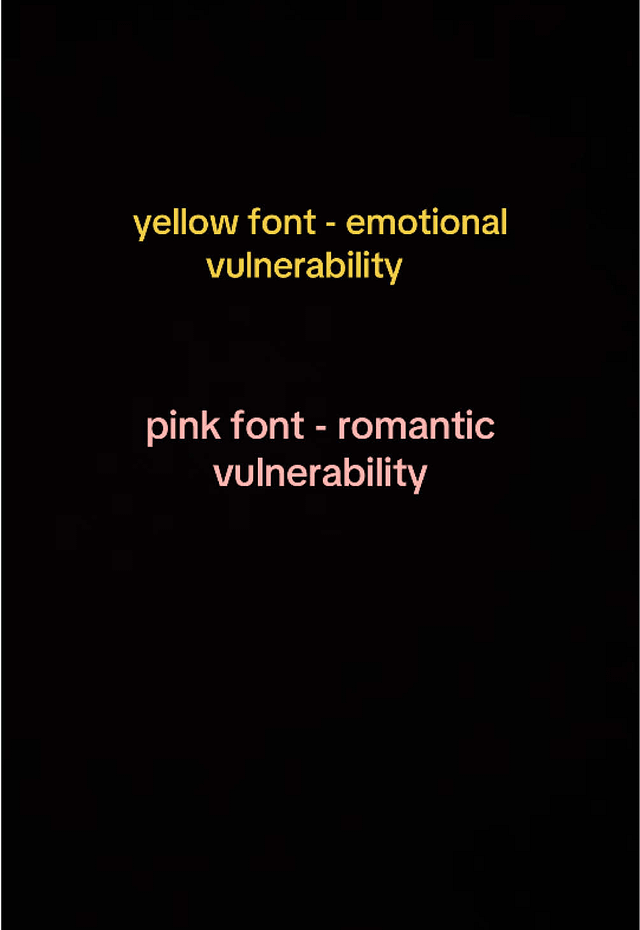
In content, yellow typography communicates vulnerability, healing, and emotionally raw thoughts; blue and pink each carry their own context as well. “Blue font” is used for peaceful and/or melancholic content, and “pink font” is used to convey romanticization and love.
 Tiktok failed to load.
Enable 3rd party cookies or use another browser
We have seen this grow in content, and view it as a telling shift in how younger generations are trying to pack in context and deeper meanings as modes of communication get shorter and more impersonal online. Through something as trivial as font color, creators provide additional context for the kind of thought they are trying to convey, creating a secret language online that must be known to truly understand one another.
Summer 2016
At the beginning of 2026, we saw a boom in content relating to 2016. Everyone was nostalgic for the rosy-filtered, choker-wearing, soft-grunge era of 2016, evidence of a cultural yearning for a pre-algorithmic time that felt carefree as we face our current reality.
While the 2016 nostalgia resurfaced earlier in the year, there has always been an online fascination with the summer of 2016, with content from maybe every year discussing the superiority that was Summer 2016 in many of our minds.

How this shows up on social:
Since the 2016 nostalgia began at the beginning of the year, we have been patiently awaiting the summer to see if this 2016 resurgence will come in full force to commemorate the most beloved summer of our lives.
Similarly to the signs people observed in January for why it is going to feel like 2016 in 2026, people are pointing to signs of this summer to find the 2016 magic this year: the World Cup, Zara Larsson being the pop girl of the moment, Starbucks bringing back the Unicorn Frappuccino, and the Knicks being in the NBA Finals revitalizing NYC in a huge way.
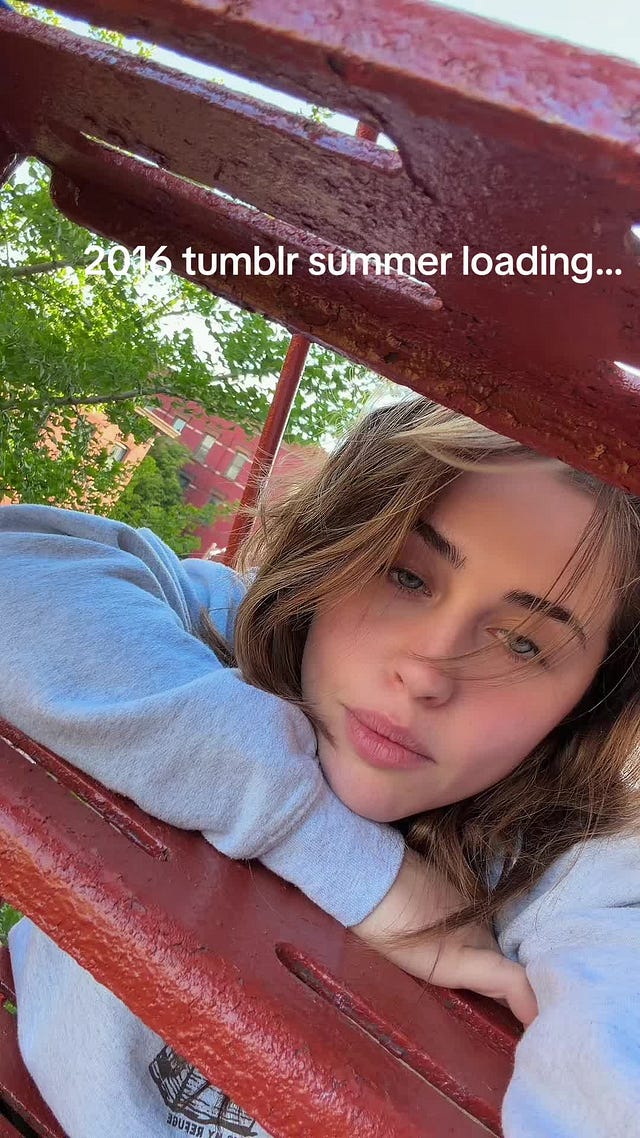
While there hasn’t been any notable content trends that reference 2016 Summer, there is certainly no shortage of content, with content emerging in the last two weeks claiming that this summer will be 2016 summer all over again, fueled by the magic of summer nostalgia– we can only hope that it’s true.
 Tiktok failed to load.
Enable 3rd party cookies or use another browser
Finsta Comeback
Speaking of 2016 nostalgia, second accounts are so back. In the mid-2010’s, fake Instagrams– or “finstas” became wildly popular as a place to post raw, secret, or unpolished content, away from the main grid. It was a way to keep your main grid aesthetically aligned while still sharing secret thoughts and photos with friends. The Close Friends story addition on Instagram didn’t completely eliminate the second-account trend, but it did provide a way to keep all of your content on one account while still sharing time-sensitive secret content with a select group, leading to finstas dying down and many accounts being abandoned.
However, as we have gravitated toward unpolished, raw, and unfiltered content in the last year, with the rise of AI and content feeling repetitive, along with the fascination of behind-the-scenes content rising in the last year, it feels only fitting that finstas are having their time in the sun again as a mode to provide real connection and exclusivity to trusted insiders.
How this shows up on social:
In many ways, content has been adopting the blueprint of the finsta– blurry photos, unfiltered images, no-context posts. With people beginning to jump into the creation of second accounts to post different content or access a fresh algorithm, we are seeing celebrities, influencers, and even brands begin to adopt the second account for photo dumps, unpolished content, and a new look at their brand, without disrupting the aesthetic of their main account.
Celebrities like Doechii and Rachel Sennot have recently created second accounts meant to be a photo dumping ground for their more personal moments, reserved for fans of them who want an insight into their real world. Among them are celebrities like Addison Rae, Hannah Fields, and Gigi Hadid, all keeping a second account alive for those that are interested in the unfiltered look into their lives.
Brands are beginning to tap into this phenomenon as well, with Balenciaga’s second account @keeppprolling featuring behind-the-scenes, raw content of their latest campaign, Keep Rolling. With their main account having over 14 million followers and this second account with a modest 12.5k, it creates an intimate space for fans of the brand to learn about the process behind their campaigns and see glimpses only those in the know get access to.
On the ground floor of this second account trend was the NBA, with the NBA Research and Development Team account hitting socials in 2025. Viewers were unsure at first if they were a part of the NBA, or if they were simply a fun account created by basketball fans, mostly due to the nature of the content being comedic, silly, and leaning into trending conversations– a complete departure from the content on the NBA’s main page.
The second account provides a new point of connection to your brand, making people who know about the “secret” account feel more connected and like insiders to the brand itself. In a world of unpolished content becoming more sought after, the resurgence of second accounts will continue to intrigue online audience.
Welcome to the Villa
Last year, the impact of Love Island USA on content was undeniable, with Peacock seeing a record-high viewership for the premiere of the 2025 season. For the 2026 premiere of Season 8, it was reported that the first three days after release have reached a total of 824 million minutes watched– a staggering 74% increase compared to the initial three-day total of Season 7. Not only did the viewership for the season 8 premiere outpace any series Peacock has ever debuted, it is also telling of how culturally significant Love Island has become, despite its grueling time commitment of 6 hours of content a week.
While we are constantly worrying about attention spans, the level of focus and commitment required to be a Love Island viewer is an outlier, and for good reason. Love Island is an addictive cultural phenomenon because it operates in near-real time, giving viewers the thrill of watching real people navigate romance and drama live.
Additionally, the online discourse the show inspires has a huge impact on the show and the viewership experience. Through voting, fans have direct power to alter the show’s trajectory, driving massive social media movements without ruining the show’s authentic feel. It’s also the closest thing we get to real-time viewing in the streaming era, when we all tuned in to watch a show at the same time, creating a uniquely interactive, community-driven viewing experience that is unparalleled.
How this shows up on social:
With Love Island USA premiering only last week, the internet is already awash with content, full of commentary, memes, and predictions for what is to come.
There is always an opportunity for brands to get in on the action, and the Love Island phenomenon is no exception. Some brands have become staples in talking about what is going on in the Villa, like soda brand Poppi, whose products and social platforms are flooded with content referencing the show in real time. But, as viral memes and trending sounds pop up, there are always brands who are eager to jump in to find their voice amidst the conversation.
 Tiktok failed to load.
Enable 3rd party cookies or use another browser
Jumping onto a cultural trend is always a gamble for brands. However, when a piece of media transcends into a passionate ritual, it creates a cultural force that defies traditional demographics—and traditional marketing tactics. For conservative brands hesitant to join these conversations, the phenomenon shouldn’t be viewed as taboo. Instead, its popularity is an invitation to step outside comfort zones and meet audiences exactly where they are.
This summer, a distinct thread is emerging that ties the future of social connection together: in a highly optimized online ecosystem, audiences are creating an online culture built on nuance, raw reality, and being in the know.
Whether it is decoding text colors, hyper-analyzing raw reality stars, or revitalizing “finstas”, audiences are creating a world where meaning is hidden in plain sight, transforming trivial details into a secret dialect for those actively paying attention.
👏🏽👏🏽👏🏽