


Welcome to neuewave!
In the last month, pop culture felt like it revolved around a small collection of key events – not just controlling pop culture coverage, but also serving as a conversation launchpad for everything from music and artistry to class, power, and brand presence in our everyday lives.
For May, we did a breakdown of the 4 events that occurred last month, which industries had the highest attendance, and how the online conversation is being influenced by these tentpole cultural moments. The online landscape this month reveals that authenticity isn’t just a buzzword, but a necessity for winning trust with online audiences.
Let’s dive in.
Coachella
Among all the brands that activated in some way at Coachella, here are the top industries that attended:
30% Beauty Brands
19% Fashion & Apparel Brands
19% Food & Beverage Brands
Brands show up big for Coachella– and this year was no exception. From huge activations like Pinterest, YSL, and Electrolit, to brand houses like Poppi and White Fox, to exclusive events, our team identified 95 distinct brands in our feeds that activated this year— and we’re sure we missed some.
While it makes sense that beauty brands go all in at a music festival centered around the content, we were surprised to see exactly how many prioritize Coachella in their marketing budget. Nearly a third of all the brands that activated at Coachella were beauty brands, offering skincare, makeup, or styling boosters to ensure attendees were always camera-ready at the festival, and long after.
How this shows up on social:
Not-so affectionately called the “Influencer Olympics”—even by influencers themselves—the main sentiment is that Coachella, especially the first weekend, is designed to be a content engine first, music festival second. This focus has noticeably intensified over the years, but something about the rise of tech advancement and heightened awareness of how technology and media influence our daily lives made the brand-forward elements entirely unavoidable.
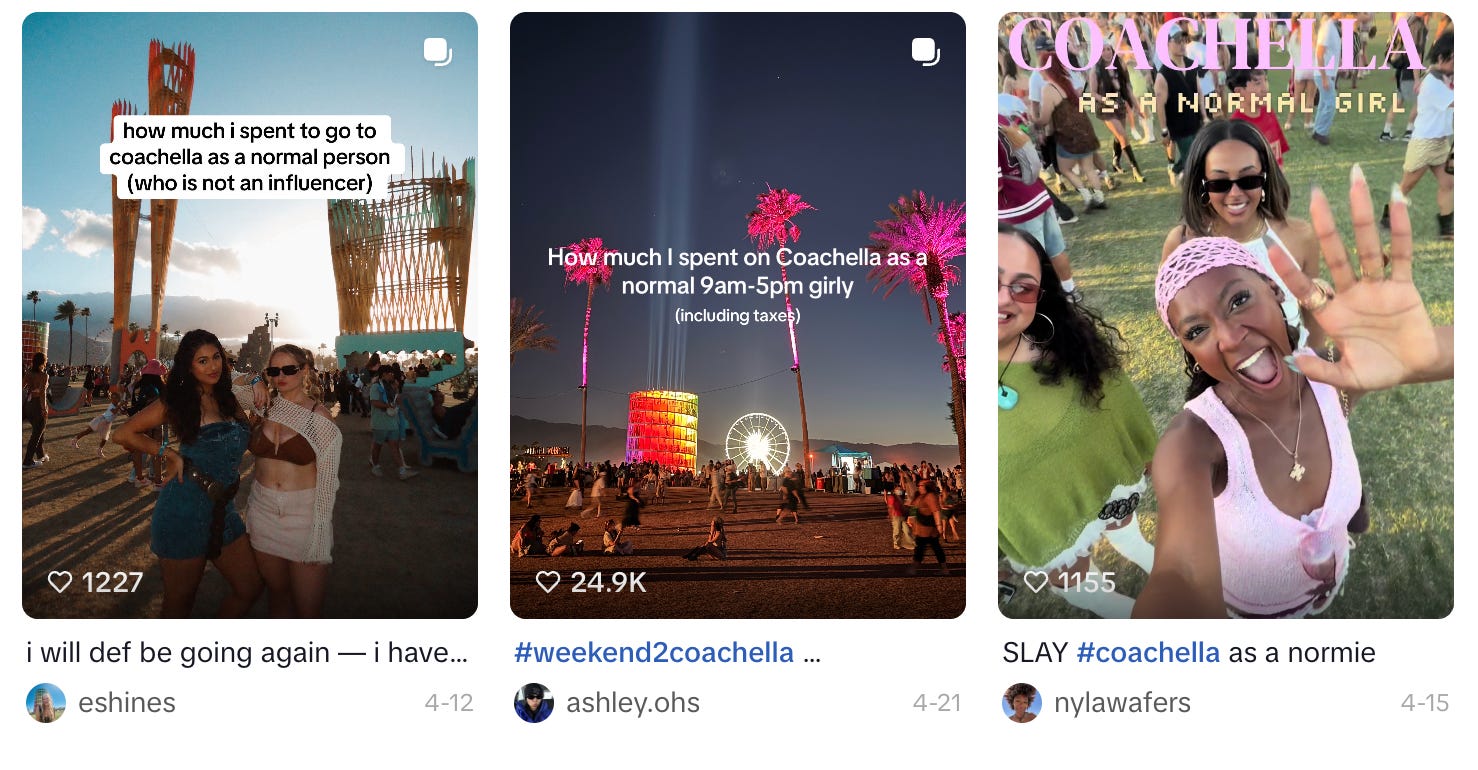
However, while last year’s coverage of Coachella felt exposing and negative, with content showing the non-glamorous sides of the festival to “deinfluence Coachella”, this year’s discourse focused on how the Coachella experience differs based on your “role”. Though attendees gather in the same places, on the same stages, and in packed crowds, the integration of brand presence, activations, and access to increasingly exclusive experiences widens the gap between the experiences of influencers and those of “regular” attendees.
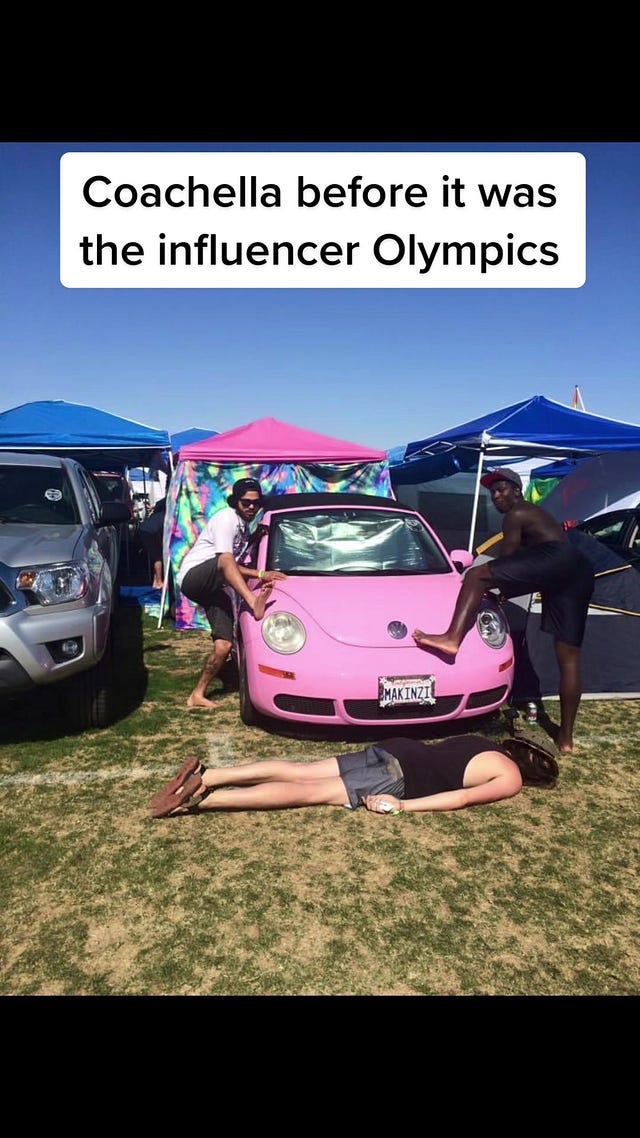
Additionally, nostalgia continues to infiltrate festival content, as users compare past Coachella experiences with those of the modern era. Following the “2026 is 2016” trend, people are posting content reminiscing about what Coachella used to be in its pre-influencer era, a time when the festival was primarily about more indie music and experience, not the mainstay brand presence and social media opportunities.
 Tiktok failed to load.
Enable 3rd party cookies or use another browser
Aligned with the nostalgia we have for a pre-algorithmic internet, this yearning for events that don’t have an extreme presence from influencers or brands feels deeply resonant across popular culture and aligns with what we hoped to see in 2026– BTS content becoming not just how things are made, but what real life looks like when you pull the influencer curtain away. Real people who feel relatable, doing interesting things that we get to feel a part of, learn about, or be inspired by, were the kind of UGC that won over Coachella weekend– making identifying as a “normal” person more marketable than ever.
Stagecoach
Among all the brands that activated in some way at Stagecoach, here are the top industries that attended:
14% Alcohol & Spirits Brands
22% Fashion & Apparel Brands
27% Food & Beverage Brands
Long considered to be Coachella’s more laid-back, country counterpart, the brands that activate here are very different from Coachella– focused on Food & Beverage, Fashion Brands, and Alcohol and Spirits. While different, this isn’t surprising– when you think of American western culture, primarily known for its spirits, identifiable fashion, and the cuisine, the brands that showed up and succeeded were the ones that leaned into the experience and let their brand serve as the venue, not the theme. However, those that naturally lend to Western culture were the true winners– it’s no wonder Boot Barn had one of their biggest, most popular activations at the event this year.
How this shows up on social:
Stagecoach and Coachella are often lumped together in content following the events, and this year was no exception. Most content that isn’t about fashion focuses on the differences between the two events, without a real consensus on which is better. Some say that Stagecoach is more relaxed and music-focused, while others say that the vibes at Stagecoach don’t deliver the same euphoria as Coachella. It’s the bean soup content of music festivals; individual preferences for a music festival experience will be the deciding factor.
While there isn’t a clear consensus on which event is better, there was a clear winner on social media for the event, and it had nothing to do with the music.
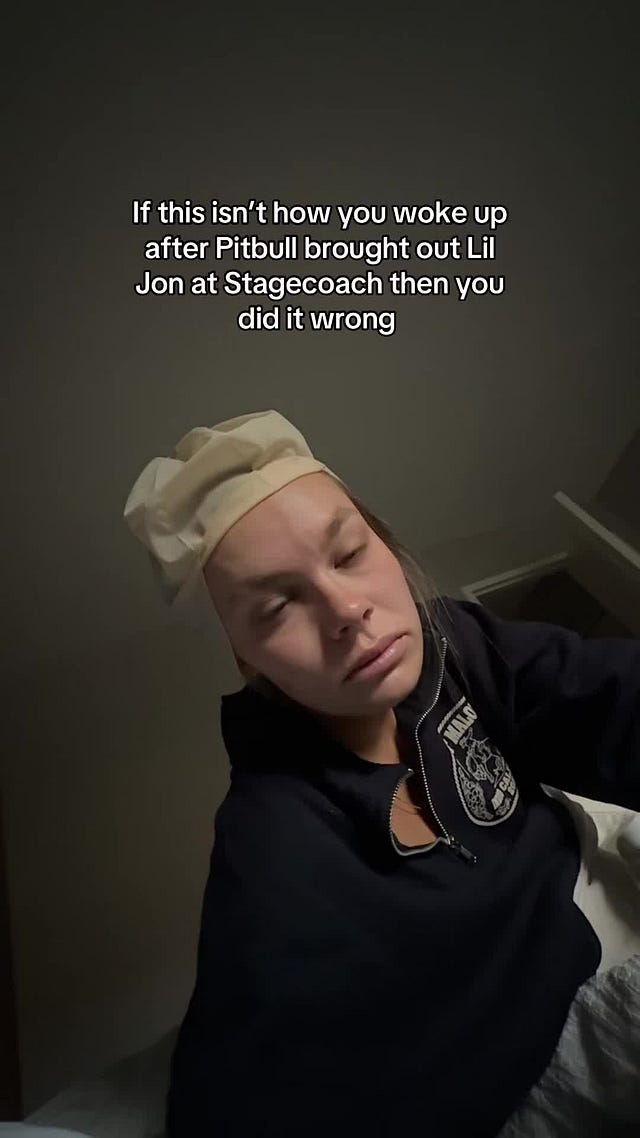
While Stagecoach felt like a sea of sameness in coverage, the content that stood out to us came from none other than Waterboy, an electrolyte company that figured out how to win on social during an event known to be less influencer and brand-focused. With an activation at the festival, their Social Media Manager, Madi Marotta, who also happens to be an influencer with over 300k followers on TikTok, was onsite to capture it all on the Waterboy channels. However, Madi and influencer friend Lilly Claire were also there to attend the event, and seamlessly integrated their own experience into the Waterboy channel’s content. With coverage of them at the activation, to unhinged videos of them at the late night shows with follow up video hungover the next morning, it was almost impossible to tell which piece of content was on their personal pages, and which belonged to the brand’s own channels. The company has been able to leverage its Social Media Manager’s own content channels and style to create event content that felt authentic, well-integrated, and like it came from a relatable creator, not a brand. Nothing was siloed from the brand channels and their own, letting both the brand and personal content live fluidly among all three accounts.
And, it worked. Both Waterboy’s and their individual channel’s comments are full of followers saying that they purchased Waterboy because of their love for Madi and Lilly’s content, and that they watched Stagecoach coverage exclusively through the two women across the three accounts.
The social strategy that Waterboy deployed was a seamless integration of in-person brand activations, influencers, and social content, introducing what feels like the next era of how brands can successfully insert themselves into culture both on and offline.
 Tiktok failed to load.
Enable 3rd party cookies or use another browser
Met Gala
The Met Gala feels complicated this year.
Traditionally, the extravagant event has been an extreme display of wealth and celebrity, often overlooked in favor of its celebration and focus on the arts, fashion, and art history. As one of the biggest nights in fashion and the arts every year, the coverage and conversation has centered something else entirely: the funds raised and those that funded it– most notably, the big tech tycoons that bought tables.
With multiple celebrities whose outfits are often highly anticipated, such as Bella Hadid, Zendaya, and Ariana Grande, sitting out of the Met Gala this year due to Jeff Bezos being a key sponsor, we anticipated the energy would be different than in years past. However, with the presence of Meta, Snapchat, OpenAI, and Google executives attending and purchasing tables, the coverage has been about the tech bro takeover and the amount of money raised by the ultra-rich at the event.
How this shows up on social
It feels like there was just as much content analyzing and discussing the fashion as there was those posting in support of boycotting the Met Gala or highlighting those arrested for protesting Bezos’ role at the event.
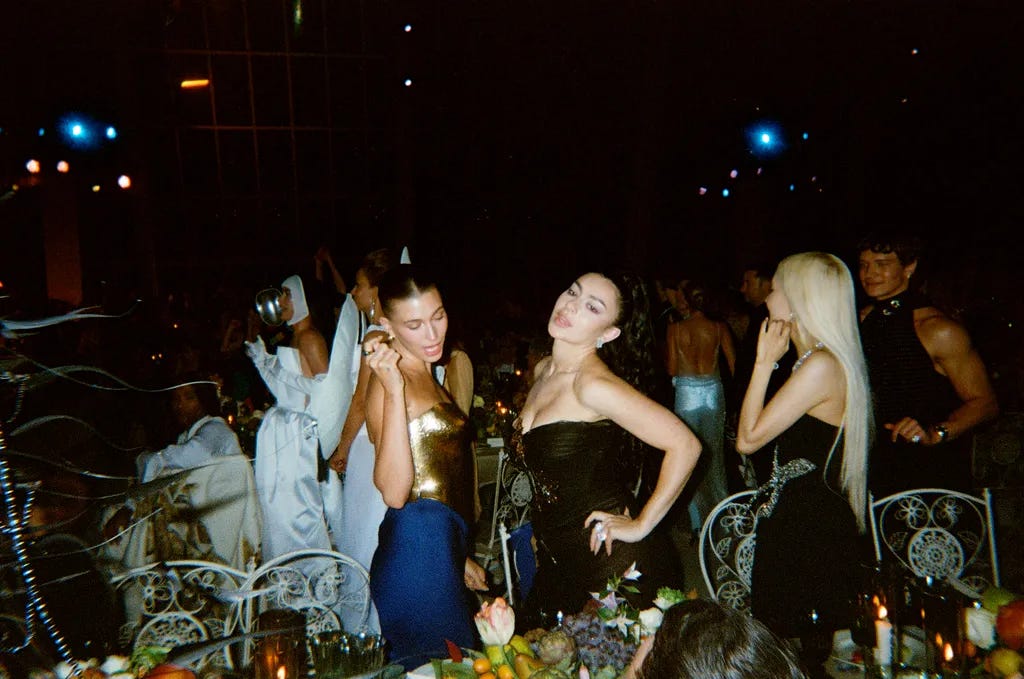
When relatability and BTS style content are reigning supreme on socials, Vogue’s attempt to bring an unpolished and more attainable view to the least relatable event was a breath of fresh air among the coverage– and some of the most shared images online.
They deployed Gen Z superstar Gracie Abrams to capture photos while at the Met Gala event with a film camera. Notoriously, the Met Gala does not allow phones or photography once you get past the carpet. By providing a never-before-seen view of the event, through the eyes of a beloved attendee using analog technology, it was a clever move by Vogue to bring their event down to earth, leveraging nostalgia and imperfect content to bring a more human feel to the Met Gala.
F1 Miami Grand Prix
Among all the brands that activated in some way at F1 Miami Grand Prix, here are the top industries that attended:
19% Alcohol & Spirits Brands
15% Fashion & Apparel Brands
12% Food & Beverage Brands
The F1 Miami Grand Prix has become the next venue for influencer and brand presence that translates onto social. The intersection of professional sports and influencers has seen a steady rise, reaching a turning point with the Summer and Winter Olympics, which feature Creator Programs that allow influencers to attend and cover the Games while there.
Since an increased presence of influencers and internet stars has come into other pro sport arenas, including the NBA Celebrity All-Star Game and the pre-Super Bowl flag football celebrity game. Now, F1 has become the next arena where brands and influencers alike are showing up to attend and be seen, with star-studded guests attending activations by everyone from Cane’s to American Express alongside some of the internet’s biggest stars, like Charli D’amelio and Alix Earle.
How this shows up on social:
Although many cities host F1 races - Austin, Las Vegas, Monte Carlo, Sydney, among others - Miami’s Grand Prix holds a unique place in the cultural calendar. The city’s convergence of influencers, DJs, and lifestyle events creates an ecosystem of activations that aren’t technically affiliated with F1, but get folded into the week nonetheless. The result is “Miami race week,” a moment brands have learned to capitalize on in a big way.
One standout activation this year was Carbone Beach, a three-night supper club brought to the sands of Miami Beach in honor of race week. The event drew notable attendees, including Alix Earle, Bethenny Frankel, and Hailey Bieber. Branded content from the event itself was relatively sparse, but Alix Earle generated significant buzz on her own - fueled by rumors that she crossed paths with an ex at the dinner. With Carbone as the backdrop, that story alone was more than enough organic promotion for the brand.
As for the race itself, it tends to show up less on social feeds than the surrounding sub-events. F1 has historically been a niche sport, and brands have leaned into that, using the weekend less as a sports sponsorship opportunity and more as a vehicle for exclusivity and luxury positioning. Most of what hit our feeds were influencer vlogs from race week events, not footage from the track.
From the Influencer Olympics to the star-studded Met steps, the content that is doing well online is raw, relatable, and down-to-earth. As we continue to rebel against the ultra-polished work produced by AI, the unpolished, unfiltered content is what will get audiences to stop scrolling.
The social media winners this month were not necessarily those who showed up the most, but those who successfully pulled back the curtain and gave a new, more grounded perspective on events we anticipate every year. Waterboy’s success at Stagecoach and Vogue’s viral film camera shots prove that the most valuable thing a brand can offer is a human lens.