


Welcome to Neuewave!
If your timeline feels a bit like a battlefield lately, you aren’t imagining it. As the summer heat peaks, so is the temperature online, with cultural conversations driving deep divides and passionate takes across our feeds.
In an online culture built on hot takes and constant debate, users are increasingly forced to either fiercely defend or reject the latest in pop culture, creating a divisive discourse culture that leaves little room for the middle ground.
It is clear to us that audiences aren’t interested in passive consumption anymore. Every topic demands you pick a side, moralize an opinion, and debate it in the comments– telling of an online generation eager to be passionate about anything, big or small. Whether it’s debating classic TV getting a Gen Z reboot or the moral implications of betting on reality TV, this month’s feeds demand you pick your side and let it be known.
Let’s dive into the divided conversations taking over the internet right now.
Rebooted Nachos
While we’ve been deeply immersed in nostalgia marketing for years now, with 2016 revivals and Hilary Duff-level resurgences coming in waves since pandemic times, the film industry is cashing in on its own nostalgia campaign as significant reboots of classic franchises continue to hit our screens and feeds.
While sequels have been front and center for years now, with franchises like The Devil Wears Prada 2 and Scary Movie 6 recently having major box office moments as fans finally get their favorite stories continued, this round of nostalgic media are seeing classic shows and movies getting redone with a modern spin.
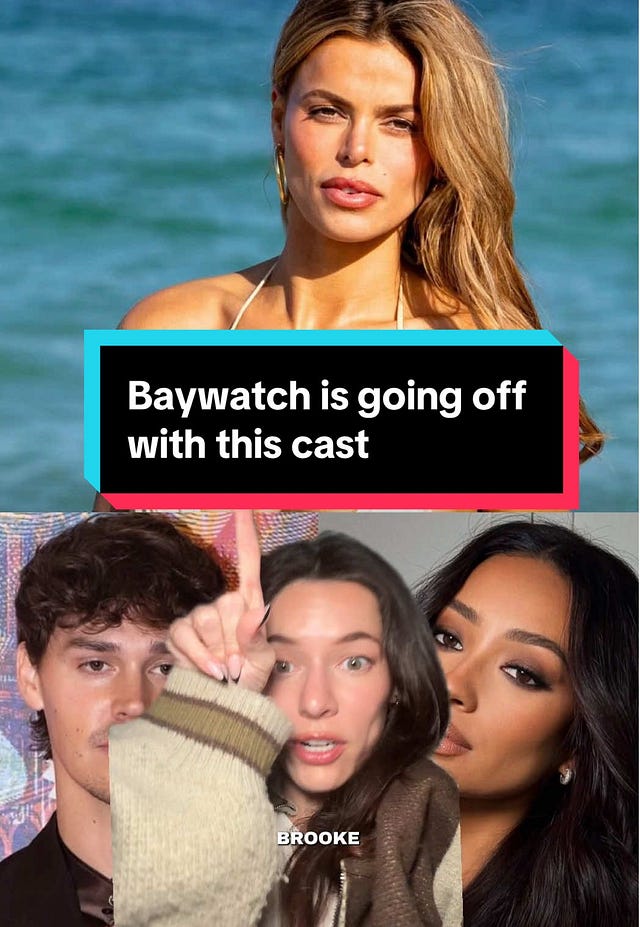
From Disney recently announcing Cheetah Girls: Next Gen to Baywatch getting reimagined with Gen Z stars Noah Beck and Livvy Dunne, the reception to the reboots have been mixed.
Those who loved the originals are fully rejecting the idea of a new chapter, with trailer and announcement comment sections filled with “Why can’t we just leave things in the 2000s?” and “this is not what the fans want to see”. Meanwhile, projects like Baywatch have seen almost exclusively excitement for the show. The original has gotten renewed attention online for those unfamiliar with the source material, and excitement for the new Baywatch has fans eager to see their favorite stars take on iconic roles.
 Tiktok failed to load.
Enable 3rd party cookies or use another browser
How this shows up on social:
In a world that feels increasingly turbulent and screen suspicion is at an all-time high, nostalgic marketing serves as a way to reject the now and go back to what we once trusted. While a generation that never experienced an era can still have nostalgic feelings toward it, there is added nuance when you take beloved media and put it into today’s context. A reboot is an invitation into a universe with history, adapted to finally consider their lived experience. And, despite the narrative that short-form video has destroyed young attention spans, Gen Z is defined by a hunger for deep lore, complex world-building, and narrative rabbit holes worth losing themselves in.
For those who instinctively reject reboots of their favorite media, consider what they offer younger audiences: a chance to see themselves reflected in stories while connecting with previous generational cultural touchpoints. To some, it might look like Gen Z is getting the reheated nachos of the past. But, when executed well, a modern reboot can deliver fresh, resonant storytelling while scratching Gen Z’s pervasive nostalgic itch.
Playing Victim
Whenever anyone posts on the internet, they’re accepting the unfortunate risk that is: scrutiny. Influencers and celebrities have continued to open up about how to protect themselves from the negative impacts that can result from public critique of their lives and opinions, while the increase in online discourse has continued to normalize anyone being able to voice their opinion about others on the internet.
This month, we’ve seen a collection of conversations around the types of treatment different people are deserving of on the internet, and whether or not they are allowed to feel like a victim to the public, or if the digital consequences of the things they put online are deserved.
Nara Smith, a lifestyle content creator and influencer with over 12.5M followers on TikTok who is known for her from-scratch lifestyle and wispy voice, recently went on Alex Cooper’s Call Her Daddy podcast, and the biggest message she wanted to share was a complete rejection of the label “tradwife” put on her from the content she shares.
The discourse online afterwards was mixed— some people were supportive of her taking ownership over her career and narrative, while others were frustrated that she is trying to distance herself from a lifestyle she portrayed for years. Is she allowed to feel frustrated by being put in this box and celebrated for stepping out of it, or is this label she was given a consequence for portraying the lifestyle that made her so successful in the first place?
How this shows up on social:
Similar to the conversation of earned criticism of Nara Smith, a viral “No Influencers” sign at a Nantucket Vintage shop prompted well-known and microinfluencers alike to take to the internet to voice their offense toward influencers being banned from an establishment.
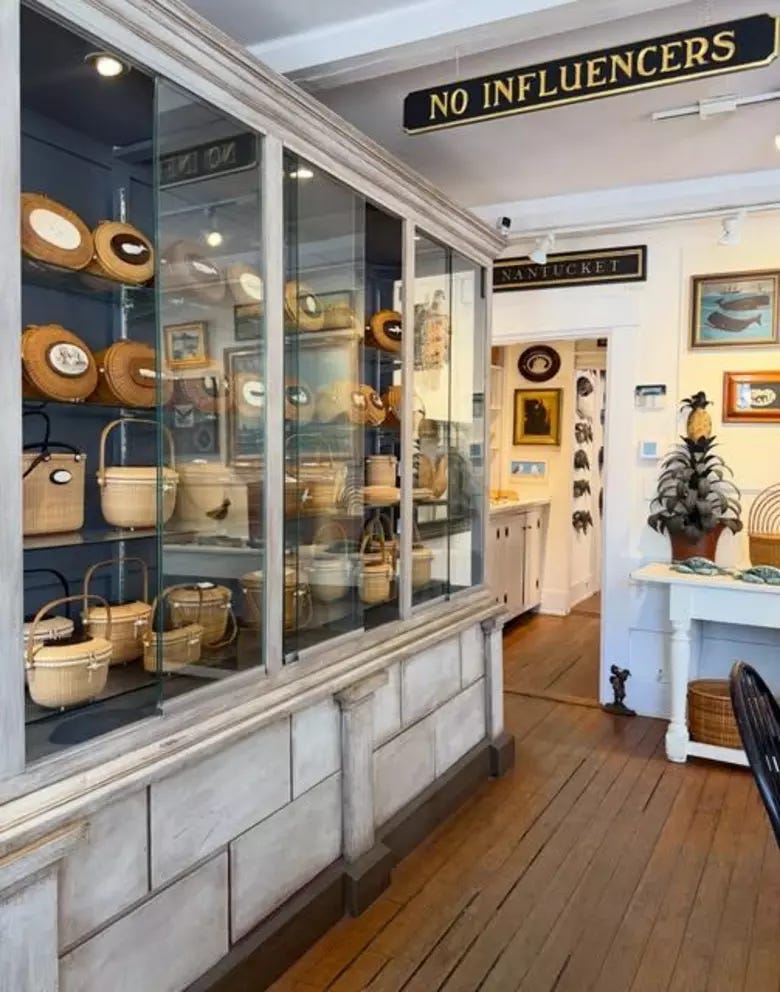
The store owner told the New York Times that the sign was “not meant to be taken literally” and reiterated that it was a light-hearted joke, but added that it is “a problem we should look at as a society.”
The discourse online is split. Some are calling out that the sign would be interpreted differently if it were labelling a behavior, like “no filming”, but suggesting a full-on influencer ban felt like a personal attack on those who make their living from posting online. Others are in support of the shop, agreeing that the entitlement and disrespect influencers exhibit in the name of creating social content should be penalized.
Influencers find themselves in a tricky spot. On the one hand, content creation is becoming an increasingly recognized and legitimate profession– with Arizona State University even starting a Bachelors of Content Creation program. On the other hand, as the public continues to be disillusioned by influencer culture, creators are increasingly being slammed for engaging in opportunities and out-of-touch behavior associated with creator culture. A crossroads is being hit as people both reject influencer’s presence, while they remain a fixture in our algorithms and ad campaigns.
Betting on Everything
After the myriad of sports betting platform ads presented at the Superbowl, it was clear that online gambling was making a major push to increase and diversify its audience. In an attempt to continue gaining new users, platforms like Kalshi are expanding beyond sports by gamifying pop culture. Now, you can bet on anything from Love Island winners to Taylor Swift wedding details to who will be Spotify’s Artist of the Year, as betting apps attempt to rebrand high-risk prediction market betting as lighthearted community-focused fun and bring women into an activity historically dominated by men.
It is working on some, with online gambling markets seeing a steep rise in usage this year. Bernstein now estimates that total market trading volumes in 2026 will reach $240 billion, a 370% increase compared to last year.
As they expand into pop culture, betting apps like Kalshi says it has doubled its share of female traders over the last year through targeting women with Love Island betting ads on social media– resulting in two-thirds of Love Island betters being women. Following suit, ads to bet on Big Brother has taken over feeds, along with tons of other upcoming pop culture moments being bet on now.
How this shows up on social:
What is interesting is that despite a significant growth in prediction market apps, it is hard to find any content that positively discusses betting online, aside from the betting app’s own socials. There is plenty of content speaking to the dangers of it, from in-depth video essays encouraging users to stay away, from ridiculing those that engage in predictive markets altogether.
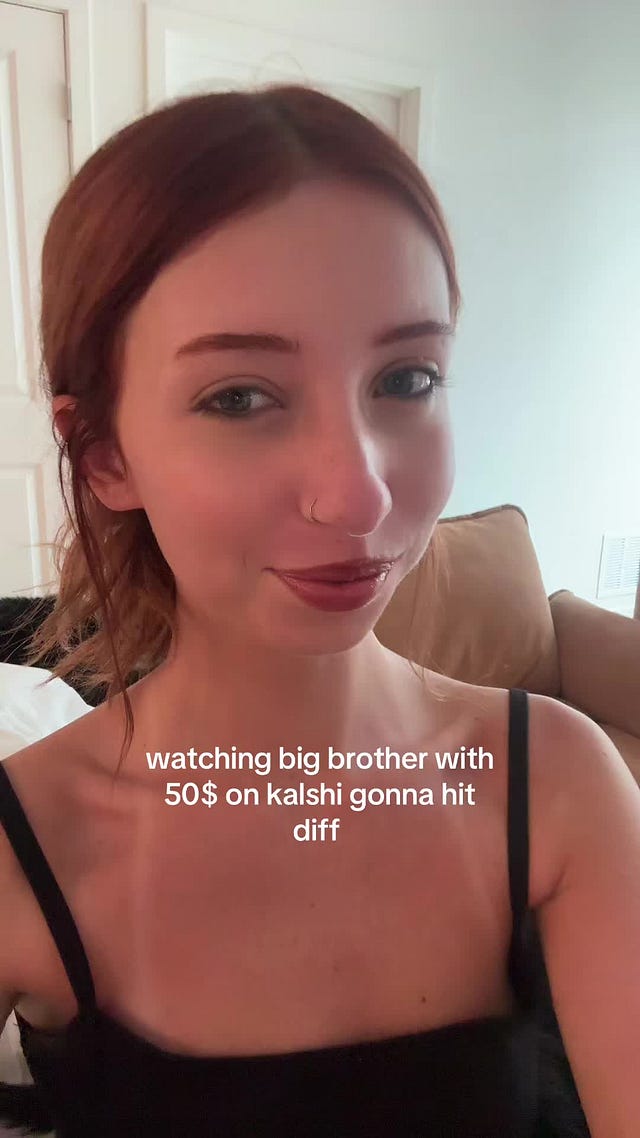
Those that admit to becoming a new user to a predictive betting app usually take to the internet to admit their losses, but there are some that seem to feel that the risk of putting money on their favorite shows only enhances the experience.
 Tiktok failed to load.
Enable 3rd party cookies or use another browser
Regardless if you are supportive of betting on pop culture or against, it is certainly going to affect the entertainment industry, especially in reality TV where you can vote on things that have already happened, or the outcomes of live fan votes that are being bet on simultaneously.
The ethics of online gambling is complicated at best– with blatant insider trading going unregulated, resulting in government workers able to bet on official speeches and reality TV hosts calling out that betting on winners with extreme accuracy can only be indicative of an insider leak.
The ability to bet on anything leads to questions on ethics when people are looking to turn a profit on real people’s lived experiences. Former Bachelorette, content creator, and breast cancer advocate Katie Thurston, who was diagnosed with Stage 4 breast cancer in 2025 recently took to her Instagram stories to slam gambling apps that allow users to place bets on breast cancer funding or clinical trials.
Additionally, with the recent wildfires spreading in the Pacific Northwest, some Americans are reportedly placing online bets on how large the blazes will grow, when they’ll be contained, and how much damage they’ll leave behind. While the Senate has tried to step in, without regulation, gambling apps are able to continue allowing users to turn a profit on real, life-or-death situations that risks creating an ethically corrupt userbase that preys on, and even roots for, other’s devastation.
If there’s one lesson marketers should take from today’s hyper-divided feeds, it’s that audiences no longer want to passively consume. They are hungry for depth, eager to dive into lore, and looking for things to care about.
In a digital world where every moment is treated like an arena for intense debate, playing it safe makes users instantly swipe. In an era of relentless discourse lies an opportunity where audiences are actively searching for something worth their passion. Audiences aren’t just looking for content to watch; they want lore to unravel, communities to join, and ideas to care about. When you respect what your audience values and build for their world, you don’t just gain followers—you build a loyal community that will champion your brand louder than any campaign ever could.