


Welcome to neuewave!
We are excited to conclude the year with our final monthly trend report! The internet and media landscape always takes a fun turn amidst the holiday promotions, and this last month has not disappointed. From marketing blunders to impassioned fanbases to tensions around consumption, this month was full of reminders for brands entering 2026 that trust, respect, and authenticity online are key to building and nurturing relationships with their audience.
So let’s close out the year with what we have been seeing online this month.
🧳 Brand Mistakes
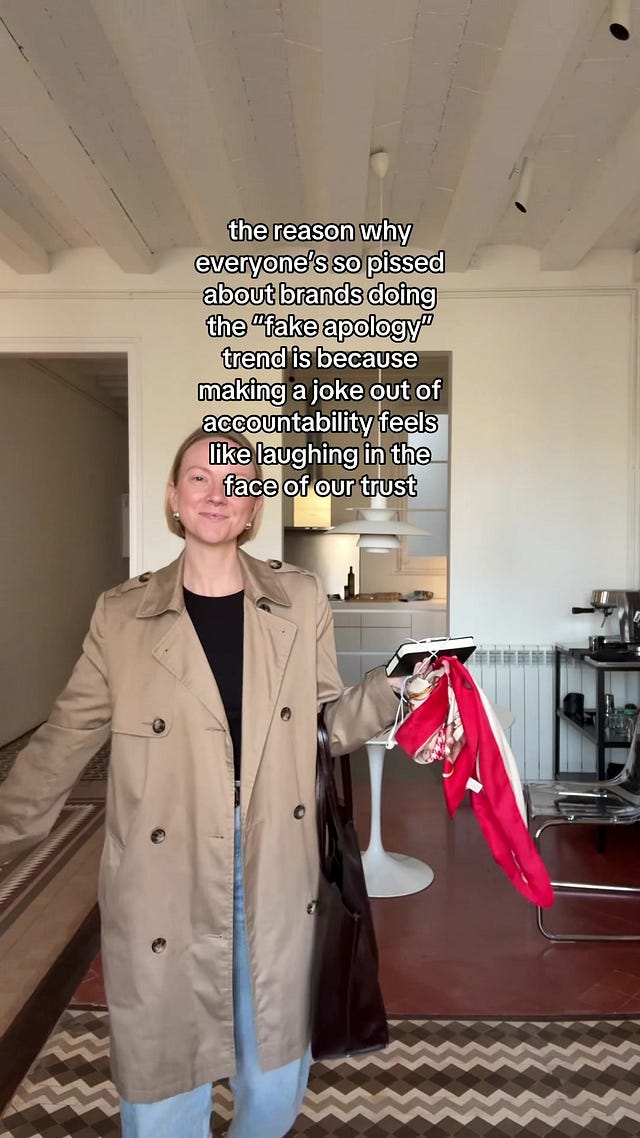
We’d like to formally apologize for the distress this may cause, but the brand apology posts are causing us secondhand embarrassment. This month, the brand marketing space has been awash with posts replicating apologetic press releases that hit the grid after a brand has committed some misstep. However, when reading further to understand what crime they are admitting to, it turns out to be a marketing ploy featuring apologies for offering irresistible deals, or for selling products that work too well.
We understand the appeal, as recognizable formats stop users midscroll as they look to uncover scandal and many brands see higher than normal engagement. But when the marketing world talks extensively about the importance of authenticity, especially in the AI age where trust is more important than ever, this is a surprising choice. What is unsurprising, however, is the public response to this new clickbait, with many finding the faux press release manipulative, exhausting, and icky for misleading users and for making light of situations where brands have needed to take accountability in the past.
 Tiktok failed to load.
Enable 3rd party cookies or use another browser
How this shows up on social:
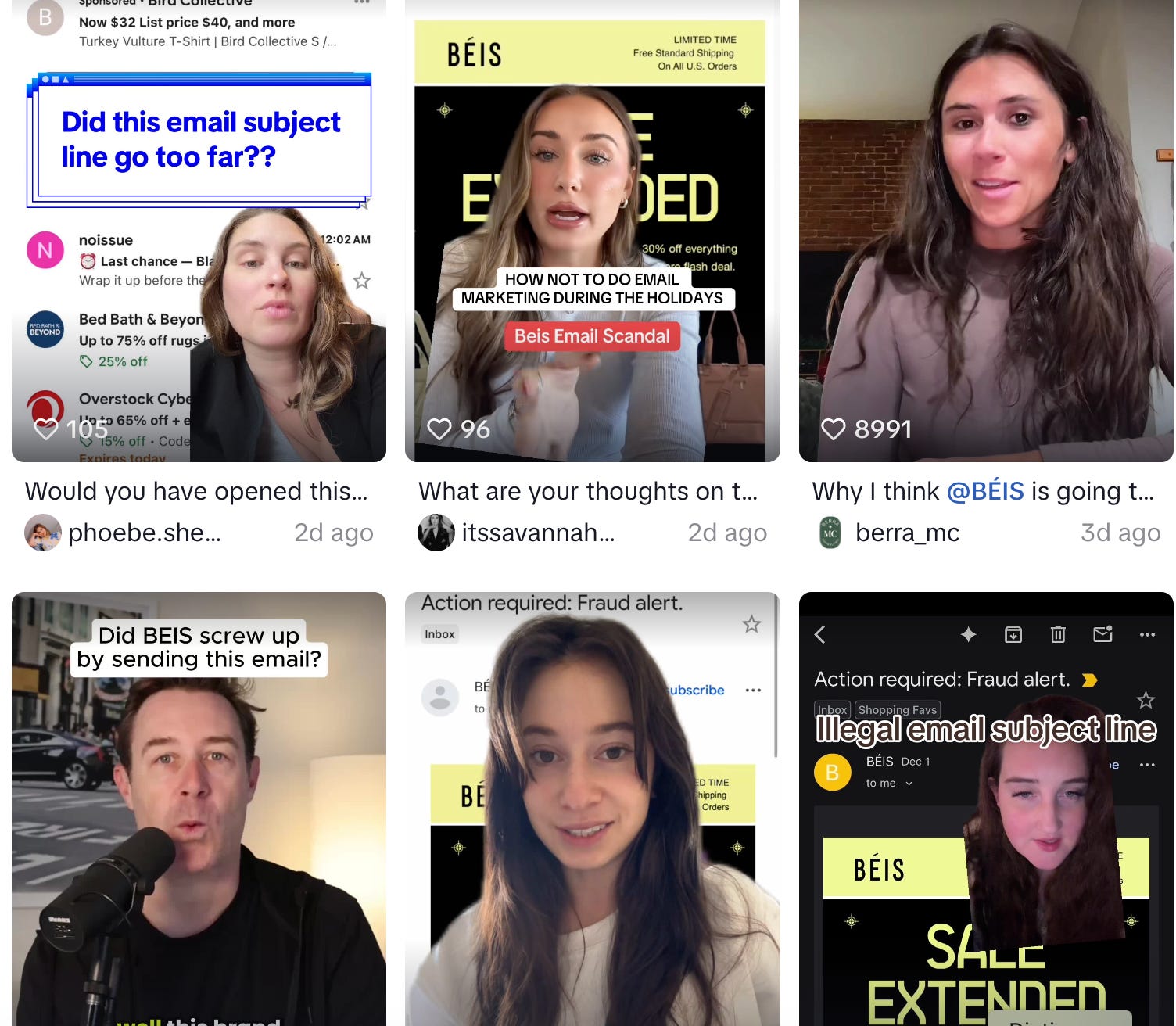
When a trend rooted in manipulation tactics for views and clickbait makes such an impact, it emboldens a brand to take it even further. Over Black Friday weekend, luggage brand Béis sent a marketing blast with the subject line “Action required: Fraud alert.”, in promotion of an extension of their holiday sale.
The backlash was immediate, not just because the action is technically illegal under FTC guidelines, but for the panic it elicited when discovered this “fraud alert” in their inboxes. Many took to social media to call out how the brand was trying to scam or dupe their customers, and some even felt panicked after buying from their sale, thinking they had been hacked in the process.
Users are telling us a few things through their distaste for fake apologies and manufactured panic:
Trust is the most important thing a brand can foster with its audience right now. Brands should fight for our trust, not take it for granted.
Users are exhausted by excessive or misleading marketing tactics and crave intentionality from brands. With brand posts and ads being so pervasive in our everyday lives, quality over quantity is key to fostering a connection with your audience.
Creativity matters more than ever, and users care about their brands telling a story—or at least providing a utility—that they can connect with. When brands lack originality or engage in the same copy-and-paste trend, users will push back.
🛍️ Consumerism Final Boss
Speaking of holiday marketing… we’ve reached our annual peak of consumption as people anticipate the gift-giving season. We have previously discussed the evolution of deinfluencing, which emerged as a direct response to consumers feeling jaded and anxious about consumerism and its environmental and economic impacts. This trend has not slowed, with many continuing to boldly reject overconsumption and capitalist culture online, citing not only the moral implications but also the ability to develop personal taste and interests outside of the consumerism cycle.
However, there seems to be an annual switch, a reliable period where the internet abandons its anti-consumerism philosophies under the pressure of giving or receiving the perfect gift. Rather than de-influencing products people shouldn’t invest in or don’t need, the internet steps into its proper influencer form to tell everyone what deserves a spot on their wish list.
How this shows up on social:
If you head to TikTok or Instagram Reels, you can pretty much find a gift guide for any person you can think of. From parents, teen boys, book lovers, pet owners, cool girls, F1 fanatics– there is a gift guide for you, filled with TikTok Shop plugs and affiliate links to guide your purchase (and add a little something extra in the creator’s stocking).
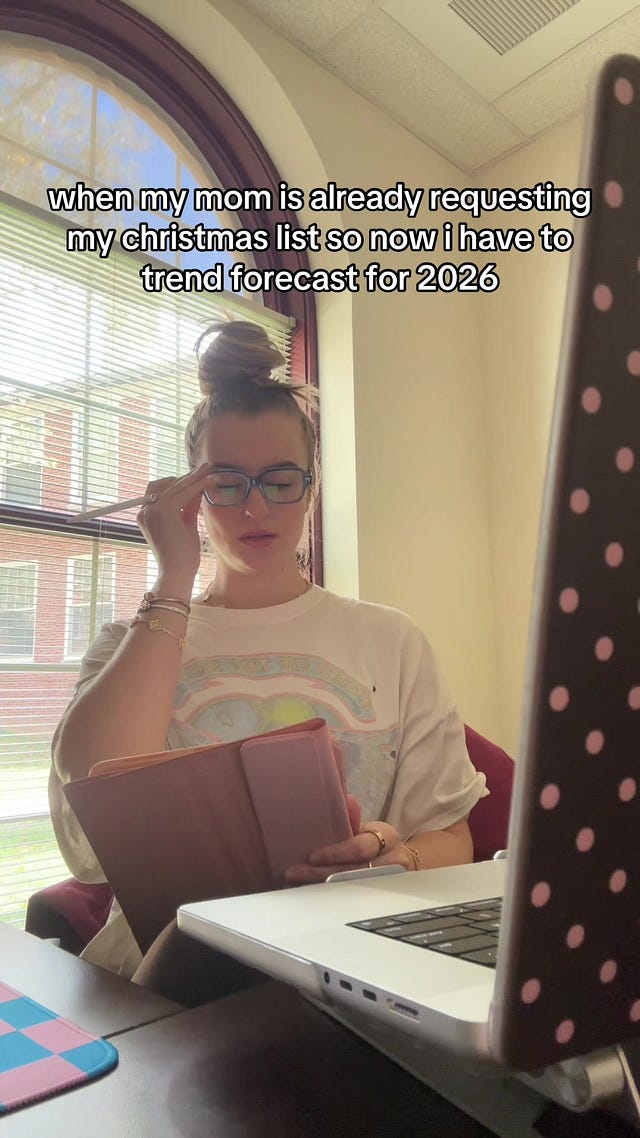
In addition to classic gift guide gurus, other trends include more manifestations and hypotheticals of what creators would ask for for Christmas if they didn’t already have it, what they will be asking for, along with crowdsourcing calls for users to fill the comments with gift ideas for them or someone specific.
In many ways, these gift guides can serve as a preview of 2026 trends, as they highlight what their favorite creators or peers will be wearing/using/doing in the coming year. While a few handmade gift guides have gone viral, the encouragement to over-consume is glaring, furthering the proliferation of people not able to develop their own style or taste, with one comment reading, “isn’t it embarrassing having to be told what you should want?”.
 Tiktok failed to load.
Enable 3rd party cookies or use another browser
📹 Real-Time Experiences
Livestreaming has ascended from a niche hobby to a dominant force in digital media, fundamentally reshaping how we consume content and connect. This surge is led by platforms like Twitch, TikTok, and YouTube Live, which offer real-time, interactive experiences across gaming, news, music, and education. Furthermore, major gaming IP like Minecraft and Fortnite have profoundly shaped audience expectations by normalizing live, dynamic virtual experiences as an everyday mode of entertainment for younger generations.
The result is a rapidly scaling market: the global live streaming sector is currently valued at $113 billion and is projected to reach $161 billion by 2032.
This shift marks a pivotal move toward an authentic, immediate connection that AI and hyper-polished content cannot replicate. And this demand will only intensify as the technology continues to advance, and AI infiltrates our feeds. In a world of media and platform narratives that are increasingly influenced by algorithms and AI content, 1:1, real-time interaction is becoming one of the only ways to ensure an audience is hearing and seeing the truth.
How this shows up on social:
Driven by the demand for more unpolished, interactive, and immersive content in the AI, digitally dependent era, we have seen both celebrities being created from streaming, like Kai Cenat and Pokimane, to celebrities jumping into the streaming universe as a new way to connect with audiences. Drake has rolled out his new album via Youtube livestream, Justin Bieber has taken to Twitch to stream intimate conversations and performances, and Love Island star Jeremiah Brown has capitalized on his summertime fame by creating an online community of his own, livestreaming video games and book clubs to his followers.
🪩 Big Fans, Bigger Haters
Gone are the days of casual viewing. After a show airs or a movie releases, it is common practice to turn to the internet to gather opinions from around the world. And in a time when public discourse and criticism can be shared online, the most devoted powerwatchers of a show, franchise, or creator have simultaneously become the biggest critics of the content they love.
This phenomenon is tricky to nail down; perhaps it’s because admitting sincere enthusiasm makes users a more vulnerable target, with the cost of defending something being higher than attacking it, or maybe fans might lean into hyper-criticism and nitpicking as a way to flex their intelligence and critical eye, figuring that tearing something apart looks smarter than simply enjoying it. Whatever the motivation, this hunger for public approval has created a dynamic in which the strongest affinity for a show fuels immediate, often intense, online criticism. After all, shared public rage is a potent engagement tool and connective anchor within a fanbase.
From reality competition shows like The Great British Baking Show, Dancing with the Stars, and Survivor to cultural phenomena like the latest Wicked adaptation, a substantial portion of the discourse revolves around what fans hate, find wrong, or deem outright insulting. Whether it’s the rage-posting about a judge’s score, the feeling of a favorite contestant being “robbed,” or even pointed criticism about production choices, this collective online dissatisfaction is now an integral part of the consumption experience.
How this shows up on social:
This phenomenon translates directly into high-volume, high-emotion social media activity that often outpaces the official content itself. Dedicated fans who feel slighted—whether by an unexpected elimination on Dancing with the Stars or perceived poor costume design in the Wicked movie—immediately convert their frustration into viral rage-posts and a wave of pointed parodies that target everything from the structure and contestants of current Survivor seasons, or perceived poor costume design in Wicked: For Good.
In extreme cases, fan outrage can force real-world reactions from adjacent media, exemplified by the DWTS controversy, where podcaster Alex Cooper hosted an exclusive livestream (!) for the eliminated Whitney Leavitt and her partner to perform their final dance.
 Tiktok failed to load.
Enable 3rd party cookies or use another browser
While this audience is split on whether this was tacky or not, it illustrates that the energy of the most passionate fans can be a double-edged sword. Their deep investment ensures viral attention, but it also means they feel entitled to voice their disappointment in the most unfiltered, tactless way, making outrage content a key signifier of their investment and desires.
This month’s trends reveal a central conflict that is defining the consumer and content landscape: the growing tension between trust and transparency in a digitally saturated world.
We are seeing cultural whiplash as audiences push back against manipulative marketing and over-consumerism, yearning for brands that earn their trust rather than take it for granted.
Ultimately, this highlights a new demand from the modern consumer: not just more content, but an authentic relationship with the brands, creators, and entertainment they consume. The internet is asking its gatekeepers to drop the clickbait, embrace the unpolished, and respect the audience that consumes their content—or face the collective fury of their most devoted users.